


Core Weapons: A spiral-shaped push rod (like a large screw) and a filter.
Working Process: The motor rotates at a slow speed of tens to a hundred revolutions per minute, driving the spiral rod to rotate like a millstone. Through immense torque, it grinds and crushes the fruits and vegetables step by step, then gently "squeezes" out the juice, like wringing out a towel.
Figurative Analogy: Like a hardworking ox, it pulls the millstone with slow but powerful steps, extracting every drop of essence.
Effect Comparison: A Comprehensive Experience from Taste and Nutrition to Daily Life
Based on completely different working principles, the final experience they bring is vastly different.
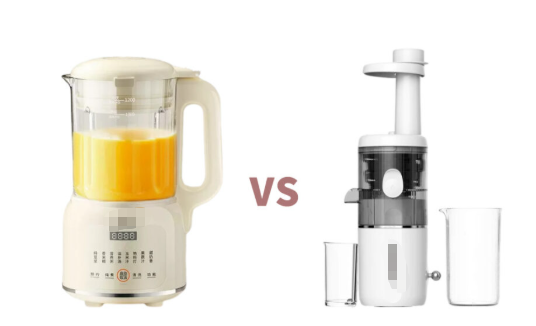
Comparison Dimensions: Juicer (High-Speed Centrifugal) vs. Slow-Paced Juicer (Low-Speed Extrusion)
Juice Yield: Lower, wetter pulp, slight waste. Higher, dry and fluffy pulp, maximizing juice utilization.
Juice Quality: The original juice produces a lot of foam, easily separates into layers (juice and water), and has a relatively rough texture. Due to the high temperature generated by high-speed impact, it is prone to oxidation and should be consumed quickly. The new juice has a rich, smooth texture, is stable, and produces very little foam. Low-temperature slow pressing results in lower oxidation and a longer shelf life.
Nutrient Retention: The high temperature and large amount of air introduced by high-speed rotation can destroy some vitamins (such as Vitamin C) and active enzymes. Low-speed cold pressing effectively avoids high temperatures and oxidation, preserving more nutrients, vitamins, and active enzymes.
Noise Level: Very noisy, like a power drill, unsuitable for use in the early morning or late at night. Very quiet, with only a low grinding sound, not disturbing neighbors.
Suitable Ingredients: Excellent at processing juicy soft fruits (such as oranges and watermelons) and hard vegetables (such as carrots). Difficult to process leafy greens (spinach, wheatgrass) and starchy ingredients (ginger, kudzu root). Extremely versatile, easily handling soft and hard fruits, root vegetables, leafy greens, and even nuts (for plant-based milk), making it a true "all-rounder."
Ease of Cleaning: Sharp blades and fine mesh filters create many hard-to-reach areas, requiring extra care during cleaning and making it relatively tedious. Simpler designs typically have no sharp blades, making cleaning safer and easier.
Price and Power Consumption: Relatively affordable with a low entry barrier. High motor power, but operates intermittently. Generally more expensive, considered an investment product. Motor power focuses on torque, allowing for continuous operation.
After understanding the differences, how do you make a choice? Please choose according to your lifestyle and main needs:
Choosing a juicer if:
You have a limited budget and are looking for high cost-effectiveness.
You prioritize speed and want to make a glass of juice in minutes.
You mainly juice common fruits (such as oranges, apples, and pears).
You don't mind juice oxidation and separation, and prefer to drink it immediately after juicing.
You are not sensitive to noise.
Choosing a slow juicer if:
You value nutrition and want to maximize the retention of vitamins and enzymes in fruits and vegetables.
You prioritize a high-quality taste and prefer rich, smooth juice with little foam.
You need to juice leafy green vegetables, herbs (such as wheatgrass and spinach), or make nut milk.
You value juice yield and don't want to waste ingredients.
You prefer a quiet kitchen environment or use it frequently in the morning and evening.
Contact us and provide the motor you need.


