


The 220v motor is reversed to do this:
Reverse push method, three steps.
In the first step, the peak voltage of 220V alternating current is approximately equal to 220V×1.414=311.08V.
In the second step, if the inverter adopts PWM modulation and the modulation ratio is set to 0.9, the voltage on the DC bus side cannot be lower than 311.08÷0.9=345.64V.
The third step, the DC bus voltage of 12V is not enough, if you connect 12V power supplies (batteries) in series, you need about 30 12V power supplies (batteries).
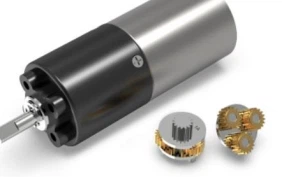
220v motor reversal is generally the case of wrong wiring, so you can try to reverse the two ends of the power supply to check. According to the principle of the motor, the 220v motor can realize the forward and reverse rotation of the motor by connecting the power supply in reverse.
The two-phase motor of 220V motor has reverse rotation. There are two windings, which are divided into positive winding and secondary winding. The positive winding has U1 and U2 for two outgoings, and the secondary winding has V1V2. Connect capacitor between N line and U2V2. Invert U1V2 and connect them together, and connect a capacitor between U2V1.
Single-phase motors seem to be relatively simple, but they are also very complex in structure and have many auxiliary devices.
A single-phase motor includes start capacitors, run capacitors and centrifugal switches. There are primary and secondary winding coils in the core slot, the primary winding is called the running winding, and the secondary winding is called the starting winding. In the line, the starting capacitor is only connected in series with one end of the starting winding, and then connected in parallel with the main winding. After the parallel connection, the two ends of the capacitor determine the forward and reverse rotation of the motor. The main and auxiliary windings of single-phase motors are not the same, and the method of exchanging the main and auxiliary windings for operation cannot be used, otherwise the motor will be burned out and the power will be greatly reduced. The wire diameter of the main winding is generally thicker than that of the secondary winding, and the number of turns is not as many as that of the secondary winding.


