


Stepper motor is also known as pulse motor or step motor. It advances a certain angle every time the excitation state is changed according to the input pulse signal, and remains at a fixed position when the excitation state remains unchanged. Thus, the stepping motor can convert the input pulse signal into the corresponding angular displacement for output. By controlling the number of input pulses, the angular displacement of the output can be accurately determined to achieve the function of positioning; and by controlling the frequency of the input pulses, the angular velocity of the output can be accurately controlled to achieve the purpose of speed regulation. Therefore, stepper motors can be considered when accurate positioning or speed control is required.
1.1 Classification of stepper motors
There are three types of stepper motors: reactive (VR type), permanent magnet (PM type), and hybrid (HB type).
Permanent magnet stepping is generally two-phase, the torque and volume are small, and the stepping angle is generally 7.5° or 15°, which is mostly used in low-cost consumer products.
The reactive stepping is generally three-phase, which can achieve large torque output. The stepping angle is generally 1.5°, but the noise and vibration are very large. It has been eliminated in developed countries such as Europe and the United States in the 1980s.
Hybrid stepping refers to mixing the advantages of permanent magnet and reactive. It is divided into two-phase, three-phase and five-phase. The two-phase stepping angle is generally 1.8°, and the three-phase step angle is 0.9°. The five-phase step angle is generally 0.72°. The hybrid stepping motor combines the advantages of the first two types of stepping motors. At present, the stepping motors used in the domestic equipment manufacturing industry are basically hybrid stepping motors.
Therefore, the stepper motors described below are all referred to as "hybrid stepper motors".
1.2 Structure of stepper motor
The stepping motor consists of a rotor (rotor core, permanent magnet, rotating shaft, ball bearing), a stator (winding, stator core), front and rear covers, etc. The most typical two-phase hybrid stepping motor has 8 large teeth, 40 small teeth in the stator, and 50 small teeth in the rotor; the stator of the three-phase motor has 9 large teeth, 45 small teeth, and the rotor has 50 small teeth. tooth.
Figure 1 Schematic diagram of stepper motor composition

1.3 Stepper Motor Control Principle
The stepper motor cannot directly connect to the power supply to work, nor can it directly receive electrical pulse signals. It must interact with the power supply and the controller through a special interface—the stepper motor driver. The stepper motor driver (see Figure 2) is generally composed of a ring distributor and a power amplifier circuit. The ring distributor receives control signals from the controller. Each time a pulse signal is received, the output of the ring distributor will be converted once, so the presence or absence of the pulse signal and the frequency can determine the speed of the stepping motor, acceleration or deceleration, start or stop. The ring distributor must also monitor the direction signal of the controller to determine whether the transition of its output state is positive sequence or reverse sequence, thereby determining the direction of the stepper motor.
Figure 2 Stepper Motor Control Schematic

2 Main parameters of stepper motor
2.1 The frame number mainly includes 20, 28, 35, 42, 57, 60, 86 and so on.
2.2 Number of Phases The number of coils inside the stepper motor. The number of phases of the stepper motor generally includes two phases, three phases and five phases. The stepping motor used in China is mainly two-phase, and three-phase is also used in some applications. In Japan, five-phase stepping motors are used more.
2.3 Step angle Corresponding to the input of a pulse signal, the angular displacement of the rotor of the motor. The formula for calculating the step angle of the stepper motor is as follows:
In the formula: - the step angle of the stepping motor; m - the number of phases of the stepping motor; - the number of teeth of the rotor of the stepping motor.
According to the above calculation formula, the step angles of the two-phase, three-phase and five-phase stepping motors are 1.80, 1.20 and 0.72° respectively.
2.4 Holding torque (static torque) refers to the torque at which the stator locks the rotor when the stator winding of the motor is supplied with rated current, but the rotor does not rotate. Holding torque is the most important parameter of stepper motor, and it is the main basis for motor selection.
2.5 Detent torque It refers to the torque required to rotate the rotor with external force when the motor has no current. This torque is one of the performance indicators of the motor. With other parameters being the same, the smaller the detent torque is, the smaller the "cogging effect" is, which is more beneficial to the stability of the motor at low speed.
2.6 Torque-frequency characteristic Mainly refers to the pulling-out torque-frequency characteristic, the maximum torque that the motor can bear without losing step when the motor runs stably at a certain speed. The torque-frequency curve is used to describe the relationship between the maximum torque and the speed (frequency) without loss of step. The torque-frequency curve is an important parameter of the stepper motor, and it is one of the main basis for the selection of the motor. Moment-frequency characteristic curve (see Figure 3).
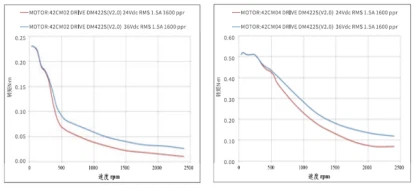
Figure 3 Torque-frequency curve of stepper motor
2.7 Rated current The rms value of the motor winding current required to maintain the rated torque.
Figure 4 Stepper motor parameter table (excerpted from the general catalogue of Leisai intelligent stepping products 2021-2022)

3 Selection steps of stepper motor
The speed of the stepper motor used in industrial applications is as high as 600 ~ 1500, and the higher the speed, the closed-loop stepper motor drive can be considered, or the servo drive scheme is more suitable. Stepper motor selection steps (see Figure 5).
Figure 5 Stepping motor selection steps

3.1 Selection of step angle
As mentioned in 1.1, according to the number of motor phases, there are three step angles: 1.80 (two-phase), 1.20 (three-phase), and 0.72° (five-phase). Of course, the five-phase step angle accuracy is the highest, but its motor and driver are expensive, so it is rarely used in China. In addition, the current mainstream stepper drivers all use subdivision drive technology. Below 8 subdivisions, the subdivision step angle accuracy can still be guaranteed, so if you consider the step angle accuracy index alone, the five-phase step The motor can be replaced by a two-phase or three-phase stepper motor.
For example, in a lead screw load application with a lead of 5mm, if a two-phase stepper motor is used and the driver is set to 8 subdivisions, the number of pulses per revolution of the motor is 200×8=1600, and the pulse equivalent is 5 ÷1 600=0 .00313 mm=3 .13 , this accuracy can meet most application requirements.
3.2 Selection of static torque (holding torque)
Commonly used load transmission mechanisms include synchronous belts, screw rods, racks and pinions, etc. First, calculate the machine load (mainly acceleration torque plus friction torque) and convert it to the required load torque on the motor shaft. Then, according to the maximum running speed required by the motor, a stepper motor with suitable holding torque is selected for the following two different use cases:
(1) For the application of the required motor speed below 300: if the machine load is converted to the required load torque on the motor shaft, then the load torque is multiplied by a safety factor SF (generally 1.5 ~ 2.0), that is, The required holding torque of the stepper motor.
(2) For applications where the required motor speed is more than 300: set the maximum speed, if the machine load is converted to the required load torque on the motor shaft, then the load torque is multiplied by the safety factor SF (generally 2.5 ~ 3.5 ) to obtain the holding torque. Referring to Figure 6, a suitable model is initially selected. Then check and compare on the torque-frequency curve: On the torque-frequency curve, use the required maximum speed to find that the maximum out-of-step torque corresponding to the maximum speed is 20% or more. Otherwise, it is necessary to re-select a motor with a larger holding torque, and re-check and compare according to the torque-frequency curve of the newly selected motor.
3.3 Selection of the frame size of the motor
The larger the motor frame, the greater its holding torque. Common frame sizes and holding torque ranges of stepper motors (see Figure 6).
Figure 6 Common frame sizes of stepper motors and their holding torques

According to the holding torque calculated in step (2), select the appropriate frame size and the specific specifications of the corresponding motor from Figure 4.
3.4 Select the matching stepper driver according to the rated current
For example, if the rated current of a motor 57CM23 is 5A, the maximum allowable current of the driver you choose needs to be more than 5A (please note that it is the RMS value instead of the peak value), otherwise if you choose a driver with a maximum current of only 3A, then The maximum output torque of the motor can only be about 60%!


