Interpretation of the principle and preventive measures of the inverter's damage to the motor
Many people have already discovered the damage of the inverter to the motor. For example, in a water pump factory, in the past two years, his users frequently reported that the pump was damaged during the warranty period. In the past, the quality of this pump factory was very reliable. After investigation, it was found that these damaged pumps were driven by inverters.
Although the phenomenon that the inverter damages the motor is getting more and more attention, people are still unclear about the mechanism that causes this phenomenon, and they do not know how to prevent it. The purpose of this article is to address these confusions.
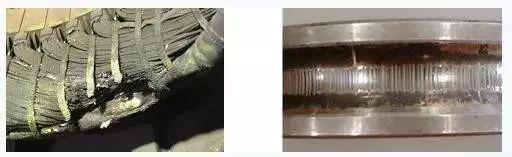
The damage of the inverter to the motor includes two aspects, the damage of the stator winding and the damage of the bearing, as shown in Figure 1. This kind of damage generally occurs in a few weeks to ten months, the specific time and the brand of the inverter, the brand of the motor, the power of the motor, the carrier frequency of the inverter, the cable length between the inverter and the motor, the ambient temperature, etc. Many factors are related.
The early accidental damage of the motor brings huge economic losses to the production of the enterprise. This loss is not only the cost of motor repair and replacement, but also the economic loss caused by accidental shutdown. Therefore, when using a frequency converter to drive a motor, it is necessary to pay sufficient attention to the problem of motor damage.
The difference between inverter drive and power frequency drive
To understand the mechanism that the power frequency motor is more susceptible to damage under the driving conditions of the inverter, first understand the difference between the voltage of the inverter drive motor and the power frequency voltage. Then understand how this difference has a negative impact on the motor.
The basic structure of the inverter is shown in Figure 2, including the rectifier circuit and the inverter circuit. The rectifier circuit is a DC voltage output circuit composed of a common diode and a filter capacitor, and the inverter circuit converts the DC voltage into a pulse width modulated voltage waveform (PWM voltage). Therefore, the voltage waveform of the inverter drive motor is a pulse waveform with a pulse width change instead of a sine wave voltage waveform. Driving the motor with a pulsed voltage is the root cause of the motor's easy damage.