


Motors are ubiquitous in the field of equipment. Let's take a look at his rationale
This is a device that is not alone. A reliable pump also needs a reliable motor. The quality of the motor directly affects whether the equipment can operate normally.
Motor type, soft start method, selection steps, damage causes and treatment methods, where is the difference between good and bad motors... These questions are all important reflections of the motor's happiness index. Let's take a look at it together.

The difference between various types of motors
1. The difference between DC and AC motors
Schematic diagram of DC motor structure
Schematic diagram of the structure of the AC motor
As the name suggests, DC motors use direct current as their power source. The AC motor uses alternating current as the power source.
Structurally, the principle of the DC motor is relatively simple, but the structure is complex and inconvenient to maintain. The AC motor has a complex principle but a relatively simple structure, and is easier to maintain than a DC motor.
DC motor
In terms of price, the DC motor with the same power is higher than the AC motor, including the speed control device that controls the speed.
In terms of performance, because the speed of the DC motor is stable and the speed control is accurate, the AC motor cannot reach it, so the DC motor has to be replaced by the AC motor under the strict requirements of the speed.
AC motor speed regulation is relatively complex, but it is widely used because chemical plants use AC power.
2. The difference between synchronous and asynchronous motors
If the rotation speed of the rotor is the same as that of the stator, it is called a synchronous motor, and if it is inconsistent, it is called an asynchronous motor.
Single Phase Induction Motor
▼
Single Phase Induction Motor
▼
How a Stepper Motor Works
▼
The difference between ordinary motor and variable frequency motor structure
(1) Higher insulation level requirements
Generally, the insulation grade of the frequency conversion motor is F or higher, and the ground insulation and the insulation strength of the turns should be strengthened, especially the ability of the insulation to withstand impulse voltage.
(2) The vibration and noise requirements of variable frequency motors are higher
The frequency conversion motor should fully consider the rigidity of the motor components and the whole, and try to increase its natural frequency to avoid resonance with each force wave.
(3) The cooling method of the variable frequency motor is different
The frequency conversion motor generally adopts forced ventilation cooling, that is, the main motor cooling fan is driven by an independent motor.
(4) Different requirements for protection measures
Bearing insulation measures should be adopted for variable frequency motors with a capacity exceeding 160KW. The main reason is that it is easy to produce asymmetrical magnetic circuit, and also produces shaft current. When the currents generated by other high-frequency components work together, the shaft current will increase greatly, resulting in bearing damage, so insulation measures are generally taken. For constant power variable frequency motor, when the speed exceeds 3000/min, special grease with high temperature resistance should be used to compensate for the temperature rise of the bearing.
(5) Different cooling systems
The variable frequency motor cooling fan is powered by an independent power supply to ensure continuous cooling capacity.
Motor section
▼
Motor selection steps
The basic contents required for motor selection are: driven load type, rated power, rated voltage, rated speed, and other conditions.
load type
· DC motor
· Asynchronous motors
· Synchronous motor
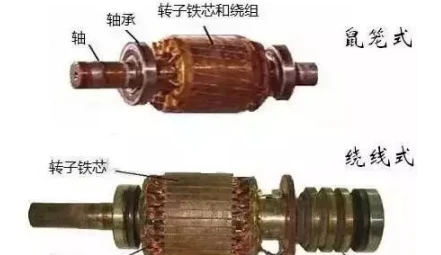
For production machinery that has stable load and no special requirements for starting and braking, ordinary squirrel-cage asynchronous motors should be preferred, which are widely used in machinery, water pumps, fans, etc.
Starting and braking are frequent, and production machinery that requires large starting and braking torque, such as bridge cranes, mine hoists, air compressors, irreversible rolling mills, etc., should use wound asynchronous motors.
Where there is no speed regulation requirement, the rotational speed is required to be constant or the power factor is required to be improved, synchronous motors should be used, such as medium and large capacity water pumps, air compressors, hoists, mills, etc.
For production machinery that requires a speed regulation range of 1:3 or more, and requires continuous, stable and smooth speed regulation, it is advisable to use separately excited DC motors or squirrel-cage asynchronous motors or synchronous motors with variable frequency speed regulation, such as large precision machine tools, gantry planers, Rolling mills, hoists, etc.
Production machinery that requires a large starting torque and soft mechanical characteristics, uses series or compound excitation DC motors, such as trams, electric locomotives, heavy cranes, etc.
Generally speaking, the motor can be roughly determined by providing the type of load driven, the rated power, rated voltage, and rated speed of the motor. However, these basic parameters are far from sufficient if the load requirements are to be optimally met. Parameters that also need to be provided include: frequency, working system, overload requirements, insulation class, protection class, moment of inertia, load resistance torque curve, installation method, ambient temperature, altitude, outdoor requirements, etc., which are provided according to specific conditions.
Summary of Motor Fault Handling Experience
When the motor runs or fails, four methods of watching, listening, smelling and touching can be used to prevent and eliminate the fault in time to ensure the safe operation of the motor.
one look
Observe whether there is any abnormality during the operation of the motor, which is mainly manifested in the following situations.
1. You may see smoke from the motor when the stator winding is short-circuited.
2. When the motor is seriously overloaded or running with phase loss, the speed will become slower and there will be a heavy "humming" sound.
3. The motor maintenance network is running normally, but when it stops suddenly, sparks will be seen at the loose connection; the fuse is blown or a part is stuck.
4. If the motor vibrates violently, it may be that the transmission device is stuck or the motor is not fixed properly, the foot bolts are loose, etc.
5. If there are discoloration, burn marks and smoke traces at the contact points and connections in the motor, it means that there may be local overheating, poor contact at the conductor connection or burning of the windings.
2. Listen
The motor should emit a uniform and light "humming" sound during normal operation, with no murmurs and special sounds. If the noise is too large, including electromagnetic noise, bearing noise, ventilation noise, mechanical friction noise, etc., it may be a harbinger of failure or failure phenomenon.
1. For electromagnetic noise, if the motor makes a heavy and high-pitched sound, the reasons may be as follows:
(1) The air gap between the stator and the rotor is not uniform. At this time, the sound fluctuates high and low and the interval between high and low sounds is unchanged. This is caused by the wear of the bearing, which makes the stator and the rotor not concentric.
(2) The three-phase current is unbalanced. This is due to the faulty grounding, short circuit or poor contact of the three-phase windings.
(3) The iron core is loose. During the operation of the motor, the iron core fixing bolts are loosened due to vibration, which causes the iron core silicon steel sheet to loosen and emit noise.
2. For the bearing noise, it should be monitored frequently during the operation of the motor. The monitoring method is: put one end of the screwdriver against the bearing installation part, and the other end is close to the ear, and the sound of the bearing running can be heard. If the bearing is running normally, the sound will be continuous and small "rustling" sound, and there will be no sudden high and low changes and metal friction sound.
The following sounds are abnormal:
(1) There is a "squeak" sound when the bearing is running. This is the sound of metal friction, which is generally caused by the lack of oil in the bearing. The bearing should be disassembled and added with appropriate amount of grease.
(2) If there is a "chirp" sound, this is the sound when the ball rotates, which is generally caused by dry grease or lack of oil, and an appropriate amount of grease can be added.
(3) If there is a "click" sound or a "crunch" sound, it is the sound caused by the irregular movement of the balls in the bearing, which is caused by the damage of the balls in the bearing or the drying of the grease if the motor is not used for a long time.
3. If the transmission mechanism and the driven mechanism emit a continuous sound instead of high and low, it can be dealt with in the following situations.
(1) Periodic "crack" sound is caused by the uneven belt joint.
(2) Periodic "dong dong" sound is caused by loose coupling or pulley and shaft and wear of key or keyway.
(3) The uneven collision sound is caused by the collision of the fan blades against the fan cover.
3. Smell
It is also possible to judge and prevent malfunctions by smelling the smell of the motor. Open the junction box and sniff it. Check to see if there is a burnt smell. If a special paint smell is found, it means that the internal temperature of the motor is too high; if a heavy sticky smell or burnt smell is found, it may be that the insulation layer maintenance net has been broken down or the winding has been burned. If there is no smell, it is also necessary to use a megohmmeter to measure the insulation resistance between the winding and the shell is less than 0.5 megabytes, and it must be dried. The resistance value is zero, indicating that it has been damaged.
Fourth, touch
Touching the temperature of some parts of the motor can also determine the cause of the fault. In order to ensure safety, use the back of your hand to touch the motor casing and the surrounding parts of the bearing. If you find that the temperature is abnormal, the reasons may be as follows.
1. Poor ventilation. For example, the fan falls off, the ventilation duct is blocked, etc.
2. Overload. Resulting in excessive current and overheating of the stator windings.
3. The stator winding is short-circuited between turns or the three-phase current is unbalanced.
4. Frequent starting or braking.
5. If the temperature around the bearing is too high, it may be caused by bearing damage or lack of oil.
Motor bearing temperature regulations, abnormal causes and treatment
The regulations stipulate that the maximum temperature of rolling bearings does not exceed 95 ℃, and the maximum temperature of sliding bearings does not exceed 80 ℃. And the temperature rise does not exceed 55 ℃ (the temperature rise is the bearing temperature minus the ambient temperature during the test);
For details, please refer to the cause and treatment of HG25103-91 bearing temperature rise too high:
(1) Reason: the shaft is bent and the center line is not allowed.
Processing; find the center again.
(2) Reason: The foundation screw is loose.
Treatment: Tighten the foundation screws.
(3) Reason: The lubricating oil is not clean.
Treatment: Replace the lubricating oil.
(4) Reason: The lubricating oil has been used for too long and has not been replaced.
Treatment: Clean the bearing and replace the lubricating oil.
(5) Reason: The balls or rollers in the bearing are damaged.
Treatment: Replace the bearing with a new one.
You will know the pros and cons of the motor


