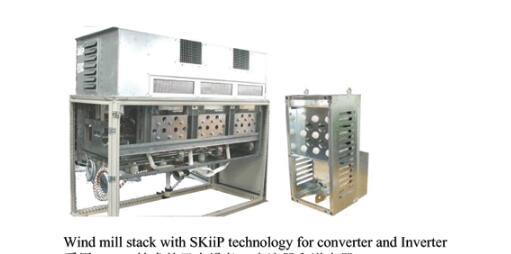
Comparison between asynchronous generator and synchronous generator
In Germany, the first large-scale variable-speed wind power (3 MW, rotor diameter up to 10 m) was born in 1980, but the project was not very successful due to mechanical problems. At that time, the cost of power devices was quite high. Therefore, wind power generation equipment often used a doubly-fed asynchronous generator with small slip to save the cost of the converter.
The 750kw variable speed or even larger wind power equipment that was actually used for commercial operation was born in Denmark and Germany in 1995.
The Dennis Equipment Factory began designing constant speed wind power equipment. This is mainly due to the fact that Denmark's wind speed is relatively stable compared to Germany. However, for wind turbines above 1 MW, they have also adopted a shifting scheme due to the problem of gearbox design. But at the beginning, Dennis equipment factory still used small slip, so the doubly-fed system is more economical.
In 1988, the first 50 kW wind power plant was equipped with a synchronous generator and a six-pulse thyristor converter. Later, a 12-pulse converter was used, but due to harmonic distortion, this technique did not last. The 750 kW doubly-fed asynchronous system started in 1993, where the slip ring has been problematic. The generators produced by a large Australian company have also been modified five times, but the running time is still less than two months. A year later, they abandoned the doubly-fed asynchronous system and replaced the asynchronous generator with a synchronous generator. We have found that since the structure of the synchronous system becomes simpler, the cost of the synchronous system converter is not higher than that of the doubly-fed asynchronous system.
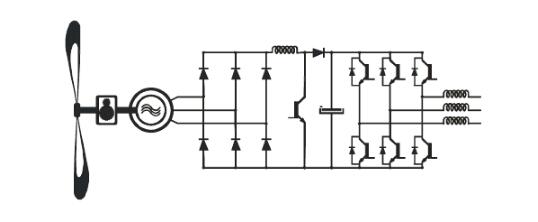
In Figure 1, we can see the circuit of the system: synchronous generator, diode rectifier bridge, booster connected to the DC bus, and an IGBT converter.
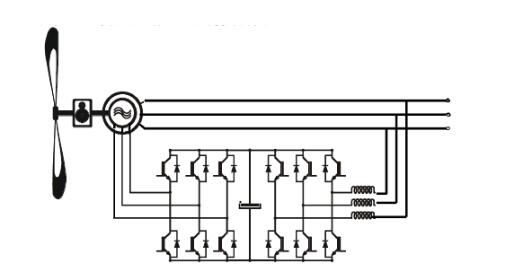
In Figure 2, we can see: an asynchronous generator with a slip ring, an IGBT rectifier bridge, a DC bus, and an IGBT converter. Some companies use the system.
Another advantage of the grid-side converter is the characteristics of the converter when the grid voltage changes very quickly.
The doubly-fed system works well when the grid voltage and frequency are stable. When using the doubly-fed system, when the grid voltage suddenly changes from 100% to 60%, the generator side IGBT current will increase to 4 times the rated current, and the generator shaft torque will also increase to 4 times the rated torque. At this time, the gearbox will be destroyed. If you don't want to use very large IGBTs and want to keep the entire system from being damaged during overvoltage, then you have to use a shunt on the generator side. In wind power applications, we must consider the life of the IGBT. In order to improve the reliability of wind power drivers, IGBTs must have a high duty cycle capability. In this application, SKIIP (without copper substrate, crimping technology) technology is very popular, in the wind power industry, SEMIKRON dominates.