


What is the cause of the stepper motor heating does not turn hot?
After the stepping motor is started, there will be a working current that suppresses the rolling effect, just like the state in which the elevator is hovering in midair. It is this current that causes the motor to heat up. This is normal.
1. Reason one
One of the most significant advantages of stepper motors is the ability to perform accurate control in open loop systems. Open loop manipulation means that no reaction information about the (rotor) orientation is required. This manipulation avoids the use of expensive sensors and reaction devices such as optical encoders, since only the stepping pulses of the input are needed to know the orientation of the (rotor). Recently, some customers have reported to our mountain electrical engineering engineers that the stepper motor is also slightly hot, so how to deal with this situation?
1. Reduce the heating of the stepper motor and reduce the heat loss to reduce copper loss and iron loss. There are two directions to reduce copper loss, reducing the electric current and current. This requires selecting a motor with small resistance and low rated current when selecting the model. For two-phase stepping motor, it is not necessary to connect the motor in series with the motor. This often conflicts with torque and high speed requirements.
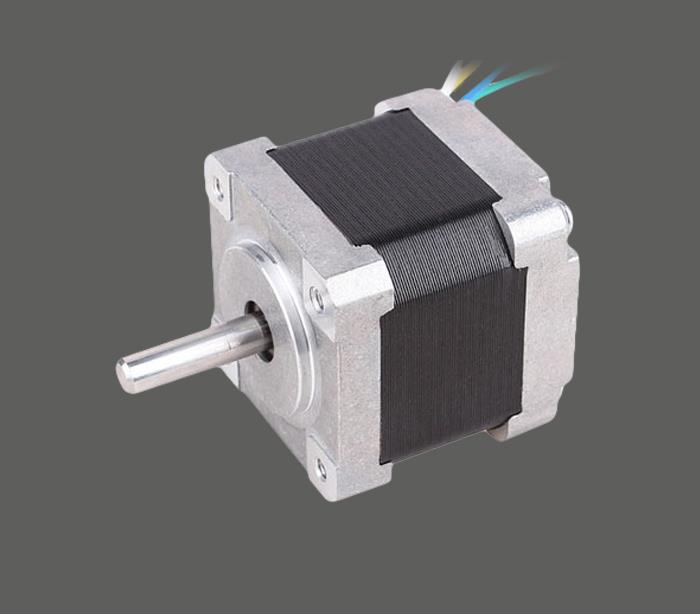
2. Regarding the motor that has been selected, the active semi-flow control function and offline function of the drive should be fully utilized. The former actively reduces the current when the motor is static, and the latter blocks the current.
3. In addition, the stepping motor driver is subdivided because the current waveform is close to sinusoidal, the harmonics are less, and the motor heat is less. There are not many ways to reduce the iron loss, and the voltage level is related to it. Although the high-voltage drive motor will bring about an increase in high-speed characteristics, it also brings about the addition of heat.
4, should select the appropriate drive motor voltage level, coordinating high-band, stability, heat, noise and other goals.


