

Disadvantages of brushless motors: Considerable friction, significant loss; substantial heat generation, relatively short lifespan; low efficiency, limited output power.
Advantages of brushless motors: Absence of brushes, minimal interference; low noise level, smooth operation; long service life, low maintenance cost.
Other differences:
(1) Scope of application:
Brushless motors are typically employed in equipment that demands high control precision and operates at high speeds, such as model aircraft and precision instruments, among others.
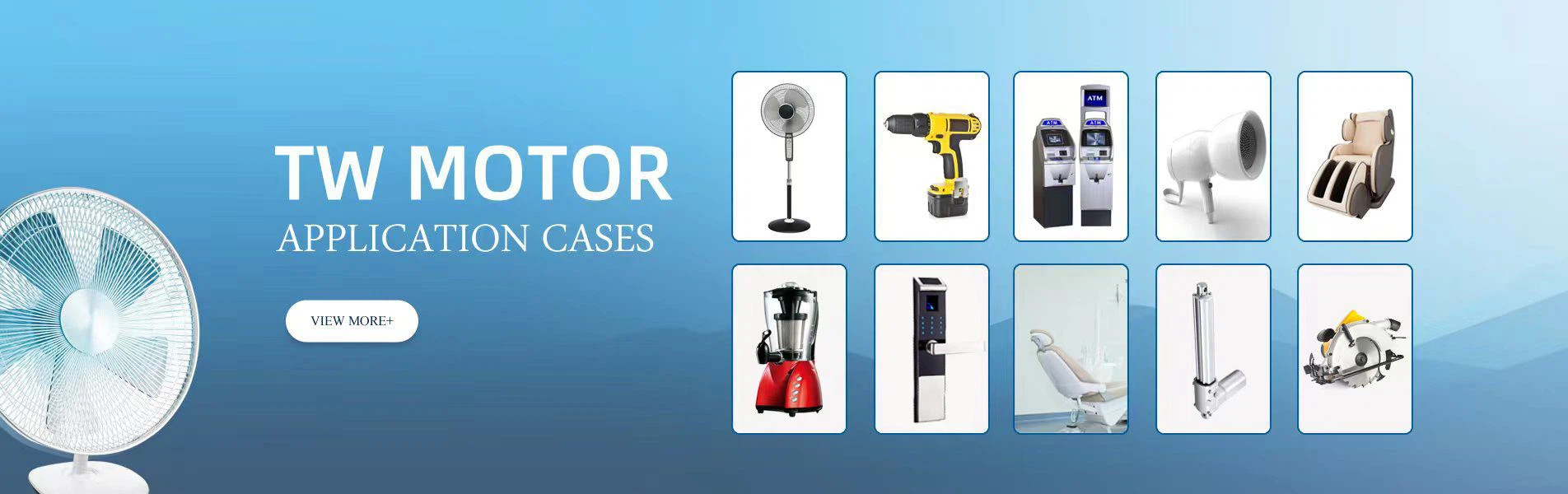
Brushed motors: Typically, power equipment such as hair dryers, factory motors, and household range hoods employ brushed motors.
(2)Service Life:
Brushless Motor: Typically, it has a service life of tens of thousands of hours. However, due to the variance in bearings, the service life of brushless motors can vary significantly.
Brushed motor: Typically, its service life ranges from several hundred to over 1,000 hours. Once the carbon brushes reach their limit of usage, they must be replaced; otherwise, it is prone to causing bearing wear.
(3) Use effect:
Brushless motor: Commonly adopting digital frequency conversion control, it features strong controllability.
Brushed motor: Generally, it maintains a constant working speed after starting up, and speed regulation is rather difficult.
(4) Energy Saving:
Comparatively, brushless motors controlled by frequency conversion technology are far more energy-efficient than series-excited motors. The most typical instances are frequency conversion air conditioners and refrigerators.
Therefore, the brushless motor combines the advantages of all motors and is also the trend of market development.


