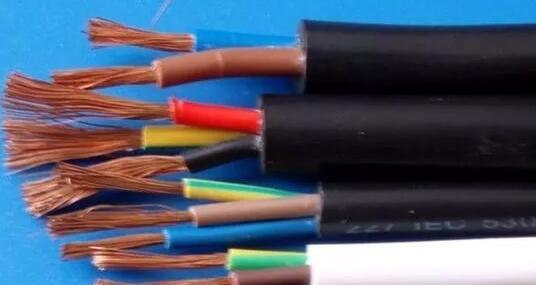
Correlation between motor stator lead wire and base
The motor stator lead wire is connected with the winding main line and determines the important component of the stator external wiring. The diameter and insulation structure of the lead wire should match the performance requirements of the motor. In addition, a lead wire lead-out problem is also involved.
From the perspective of cost control, the length of the lead should be as short as possible. According to this idea, most of the outlet of the base will be designed at one end of the base, so that the amount of lead can be reduced, especially for large-size products. The amount of lead wire will have a great influence; however, for small-size products or other-purpose motors, in view of the overall installation and aesthetic effects, the outlet hole of the base will be designed in the middle of the axial direction of the base, so that the length of the lead needs to be increased a lot. Another problem involved is the fixed problem of the lead wire in the lead-out process. If the lead wire is free during the lead-out process, the ground fault may occur due to damage of the lead wire due to vibration, frame burr and other problems during the motor running. Therefore, the lead-out, the design of the base, and the control of the lead-out process are really a big problem that must be dealt with.
The main properties of silicone rubber
Silicone rubber leads are widely used in motors. Ms. participates in the simple induction of the main properties of silicone rubber. Silicone rubber leads fully utilize the characteristics of silicone rubber.
● High temperature performance. The remarkable feature of silicone rubber is high temperature stability. Although the strength of silicone rubber is only half of that of natural rubber or some synthetic rubber at normal temperature, silicone rubber can maintain a certain flexibility and return in high temperature environment above 200 °C. Elasticity and surface hardness, and no significant change in mechanical properties.
● Low temperature performance. The glass transition temperature of silicone rubber is generally -70~-50 °C, and the special formula can reach -100 °C, indicating that its low temperature performance is excellent. This is of great significance to the aviation and aerospace industries.
● Weather resistance. The Si-O-Si bond in silicone rubber is very stable against oxygen, ozone and ultraviolet rays, and has excellent weather resistance without any additives.
● Electrical performance. Silicone rubber has excellent insulation properties, and is also very resistant to corona and arc resistance.
● Physical and mechanical properties. The physical and mechanical properties of silicone rubber at room temperature are worse than those of general-purpose rubber, but its physical and mechanical properties are superior to those of general-purpose rubber at high temperatures of 150 ° C and low temperatures of -50 ° C.
● Oil and chemical resistance. Ordinary silicone rubber has medium oil and solvent resistance.
● Gas permeability. At room temperature, silicone rubber is 30-50 times more gas permeable to air, nitrogen, oxygen, carbon dioxide and other gases than natural rubber.
● Physiologically inert. Silicone rubber is non-toxic, tasteless, odorless, non-adhesive to human tissues, has anticoagulant effects, and has very little reactivity to body tissues. Particularly suitable as a medical material.