


Vector control is a motor control technology, which can turn three-phase motor control into the same brushed DC motor, to achieve simple control, and high efficiency.
The switching current of the brushed DC motor needs to be realized by the commutator to form a rotating magnetic field. The rotor rotates under the magnetic force of the stator. The structure is simple and the torque is large and has good speed regulation performance. This is the main feature of the brushed DC motor. The excitation direction of the motor is always perpendicular to the direction of the magnetic field, and the control method is simple and effective.
Rotation principle of brushed DC motor: DC electricity passes through the commutation brushes to form a magnetic field through commutation, and under the interaction of the magnetic field and the stator, it drives the rotor to rotate.
In contrast to the traditional three-phase induction motor, it inputs three-phase symmetrical sinusoidal voltage, the spatial flux linkage is nearly circular, and the torque is stable. However, the disadvantages are also more obvious:
1. The three-phase symmetrical sinusoidal alternating current produces a rotating magnetic field that changes with time and space, and is a multi-variable system;
2. The stator current cannot adjust the excitation and torque alone. There is a strong coupling between them, a complex nonlinear relationship, a large volume and a lot of loss. ;
So, is there a way to control a three-phase induction motor as simple, effective and stable as a DC motor? Also very stable? This is the vector control method we mentioned earlier. This method is a control method proposed in the 1970s. The three-phase AC undergoes a series of coordinate transformations, and finally becomes a DC-controlled two-phase positive control method. alternating current. Decoupling complex current relationships makes the motor simple and controllable.
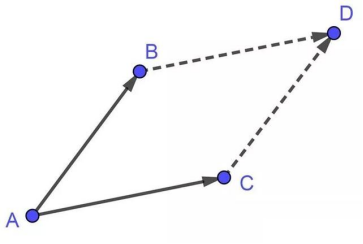
This vector control technology can be used for AC motors or DC motors. No matter what kind of motor it is, its torque is proportional to the cross product of the stator magnetic field and the rotor magnetic field, that is, the area of the parallelogram enclosed by them. When the angle between the stator magnetic field and the rotor magnetic field is 90°, the area of the parallelogram enclosed by them is the largest, and the torque generated at this time is also the largest.
Like the brushed DC motor, its stator excitation current and armature current are in their own loops and are controllable respectively. The stator magnetic field and the stator magnetic field and the rotor magnetic field can always be kept perpendicular, and the generated torque is also the largest. If you want to make a three-phase motor achieve the effect of a DC brush motor in control, you must find a way to decouple the relationship between torque and excitation. If the angle between the stator magnetic field and the rotor magnetic field can always be controlled to differ by 90°, the control efficiency of the DC motor will be greatly improved, which is the background of the vector control technology.
Vector control technique is also called field oriented control. It can decouple the complex stator current relationship and decompose the stator current into a direct axis current that controls the excitation, and a quadrature axis current that controls the torque.
As mentioned earlier, the three-phase motor is fed with three-way symmetrical sinusoidal voltages with a spatial difference of 120°, forming a rotating magnetic field in the space. Of course, if you want to generate a rotating magnetic field in space, you do not have to have three-phase symmetrical windings. Any symmetrical polyphase windings can generate rotating magnetomotive force in space, especially two-phase symmetrical orthogonal windings, which can also achieve the same , and the two phases are independent variables that are perpendicular to each other. Therefore, we can imagine the model of a three-phase motor as a two-phase motor model. Based on the principle of generating the same circular magnetic field as the three-phase motor, the two phases are 90° away from each other in space, one is responsible for torque control, the other is responsible for excitation control, and they do not affect each other.
The magnetic field and torque generated by the three-phase winding are exactly the same in magnitude and direction as the magnetic field and torque generated by the two-phase quadrature winding, and rotate counterclockwise in space at the same angular velocity to form the same rotating magnetic field. This is the transformation of the so-called three-phase stationary coordinate system to the two-phase stationary coordinate system.
Going a step further, we assume that there is a two-phase orthogonal symmetrical winding, and the DC currents Id and Iq are respectively passed through. The combined magnetomotive force generated by them is exactly the same as the two-phase static coordinate system and the three-phase static coordinate system, and the two phases are positive. The alternating winding rotates at the same angular velocity of the magnetic field, then the d, q rotating coordinate system can be completely equivalent to the previous three-phase static and two-phase static, which is the transformation from two-phase static to two-phase rotating coordinate system.
Therefore, Ia , Ib , and Ic in the three-phase stationary coordinate system can be completely equivalent to Id and Iq in the two-phase rotating coordinate system.
After Id and Iq are obtained, the multi-variable, strong coupling, and nonlinear system control of the three-phase motor will directly become the control of two independent DC components, which decouples the complex multi-variable relationship of the three-phase motor and makes the system control made simple. The following figure shows the entire vector transformation process.


