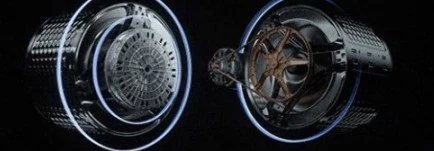
The motor is an important component of washing machine products. With the performance optimization and intelligent improvement of washing machine products, it is
The supporting motors and transmission methods have also quietly changed, especially in combination with our country's overall policy-oriented requirements of high efficiency and low carbon, energy-saving and environmentally friendly products have occupied the market opportunities. The motors of ordinary automatic washing machines and front-loading washing machines are
In ordinary washing machines, the motors are generally single-phase capacitor-started asynchronous motors, and there are many types of motors used in drum washing machines. For example, variable frequency motors are a very wide choice. For the drive of the motor, most of the original washing machines used belt drive, while most of the later products used direct drive, and scientifically combined with frequency conversion motor. Regarding the relationship between the belt drive and the motor performance, we mentioned in the previous article that if the washing machine uses a series motor, it will cause the motor to heat up and burn out during no-load operation. This problem does exist in old-fashioned washing machines. That is, the washing machine is not allowed to run without load; and with the improvement of washing machine products, similar problems can be better solved through the selection of control, transmission mode and motor. Series motors are used in mid-range drum washing machines; inverter motors and DD brushless DC motors are used in high-end drum washing machines. The front-loading washing machines all use AC and DC motors, and the speed regulation method adopts variable voltage speed regulation or changing the number of winding pole pairs. Among them, the two-speed motor has a lower price and can only be washed.
And single national dehydration speed: commissioned frequency speed regulation motor, the price is higher, you can choose the dehydration speed in a wide range of countries, and can also be used for different fabrics. Direct drive, that is, a rigid connection is directly used between the motor and the driven workpiece, without intermediate links such as screw, gear, reducer, etc., which avoids the backlash, inertia, friction and The problem of insufficient rigidity. Due to the use of direct drive technology, the error caused by the intermediate mechanical transmission system is greatly reduced.