


Vector Control Technology of AC Servo Motor
Regarding the vector control technology of AC motors, although there are many papers and various articles introduced. However, it is often explained in terms of difficult formulas and coordinates. If there is no solid theoretical basis such as mathematics and control, I believe that it is more difficult to understand. In this issue, Xiaobian tries to use simple and easy-to-understand diagrams and calculations to talk about motor construction, static and rotating coordinate changes, vector control, servo control and other motor drive technologies.
To better understand the control, let's take a look at the construction of the motor. The motor consists of a rotor mounted inside and a stator mounted on the outside (there is also a motor opposite). The permanent magnet is usually placed inside the rotor, and the copper wire is usually wound inside the stator. Then insert the center axis in the middle to drive the object.
After hundreds of years of development, motor technology has formed various classifications. The magnet used in the motor is a rare metal, and the output is mainly distributed in China. In recent years, due to the rising price of rare earth materials, the industry is actively studying how to reduce rare earth while maintaining performance while reducing product cost. In practical applications, synchronous motors are widely used.
The synchronous motor is also loaded with magnets, mainly classified into SPM and IPM (surface magnet and internal magnet):
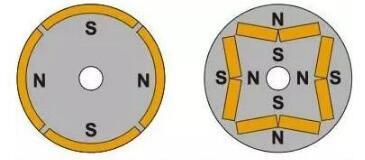
Due to the simple control of the SPM motor, since the magnet is mounted on the surface of the rotor, the power that can be utilized is mainly derived from its own surface magnet.
IPM motors are widely used because they can utilize the power of magnetism and magnetism around the magnet to generate high-density energy and can reduce the amount of rare earth used by special construction.
SPM motor:
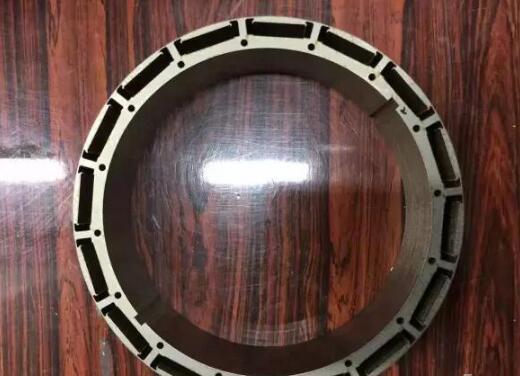
Rotor (magnet not inserted)
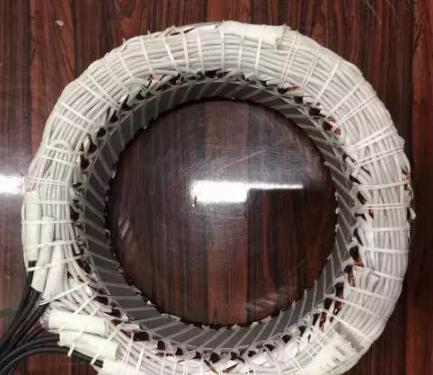
Stator (coil winding state)
We can see that the stator core has a slanted hollow, where the coil is wound. The skew should be such that the magnetic field can be averaged (refer to the relevant paper or patent for details).
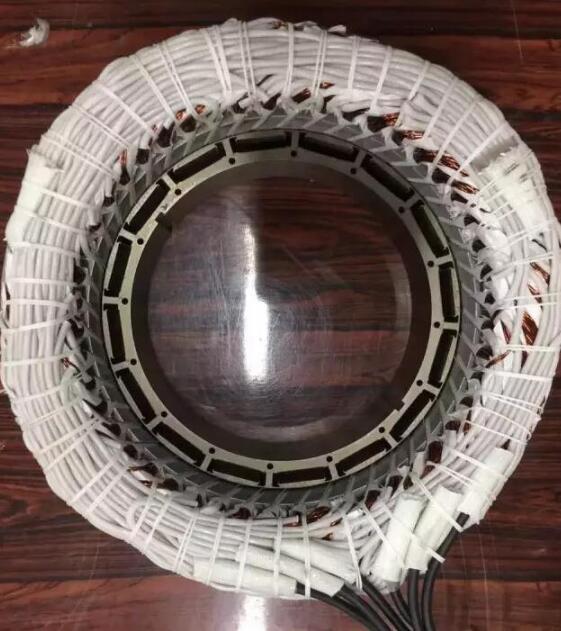
Rotor and stator
IPM motor:
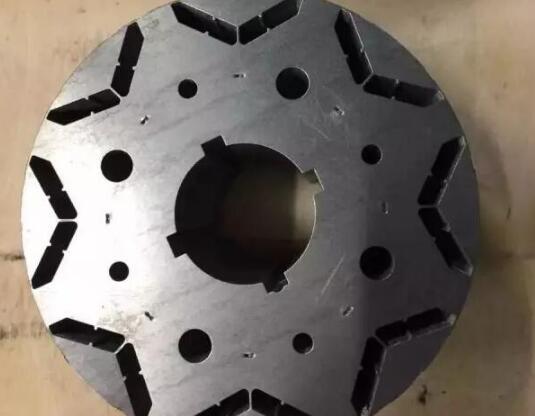
Rotor (magnet not inserted)
We can see that the place where the magnet is placed is divided into two symmetrical ones, which should be effectively utilized for the place where the excitation is to be made. This hollow symmetrical angle affects the excitation power.
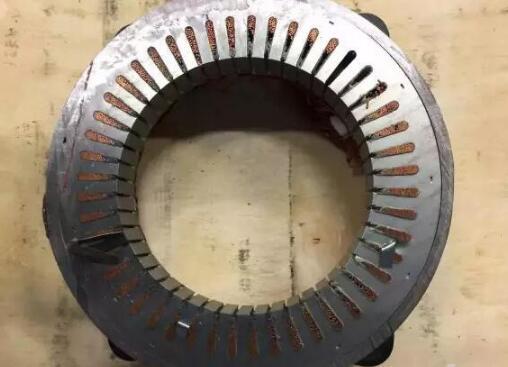
Stator (coil winding state)
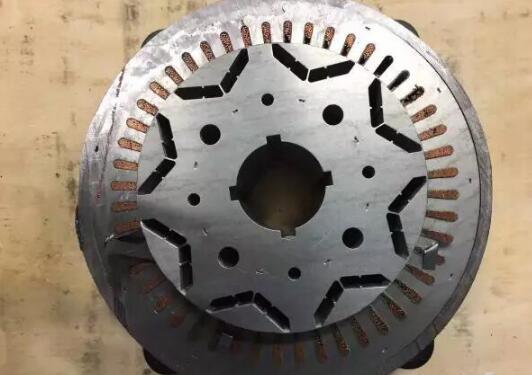
Rotor and stator


