

The structure of DC motor consists of two parts: stator and rotor. The main function of the stator is to generate a magnetic field; the rotor, also known as the armature, is used to generate electromagnetic torque and induced electromotive force. The gap between the stator and the rotor is called the air gap. Frame The outer casing of the stator part of the motor is the frame. It acts as a fixed support, because it is also a part of the magnetic circuit, so as to form the passage between the magnetic poles. (Usually made of steel castings or welded steel plates.)

. The main magnetic pole The main magnetic pole consists of the main magnetic pole iron core and the excitation winding. The function is to generate an air gap magnetic field. (The iron core is generally made of 0.5~1.5mm thick steel plate punching riveted.) Brush device The brush device is composed of a brush, a brush holder, a brush rod and a brush rod seat. The motor is used to introduce DC voltage or DC current; the generator is used to introduce DC voltage or DC current. Commutation pole The small magnetic pole between two adjacent main magnetic poles is called a commutation pole, also called an additional pole. The function is to improve the commutation and suppress the possible sparks between the brushes and the commutator when the motor is running.
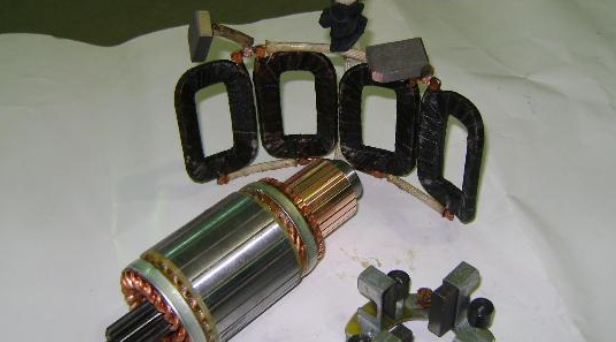
The shaft is generally made of round steel. Provide support for rotor rotation.
armature core.
The armature core is the main part of the main magnetic path, which is used to embed the armature winding. (Generally, it is superimposed with 0.5mm thick silicon steel sheets)
Armature winding The armature winding is the key part of the energy conversion of the DC motor, and its function is to generate electromagnetic torque and induced electromotive force.
The commutator is slidably connected to the brushes. In the DC motor, the commutator is equipped with brushes, which can convert the applied DC current into the AC current in the armature coil, so that the direction of the electromagnetic torque is constant; in the DC generator, the commutator is equipped with electric current. The brush can convert the alternating electromotive force induced in the armature coil into the direct current electromotive force drawn from the positive and negative brushes.


