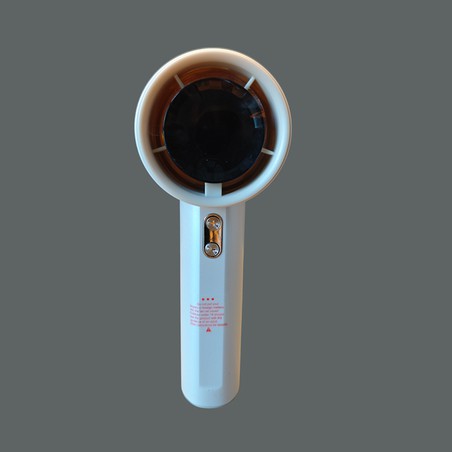
During the scorching summer heat, small handheld fans have become a staple in many people's bags. Have you ever wondered what powers such a small fan? The answer is-a motor.
So, what type of motor is commonly used in handheld fans?
✅ 1. Common Motor Type: Brushless DC Motor (BLDC)
This is the mainstream choice for most mid- to high-end handheld fans.
📌 Why Choose a Brushless Motor?
Long Life: Because there are no carbon brushes to wear out, it outlasts traditional motors.
Low Noise: Smooth rotation and quiet operation.
High Energy Efficiency: Saves energy and lasts longer with lithium batteries.
Wide Speed Range: Conveniently adjusts to multiple speeds.
⚙️ Principle Overview:
A brushless motor relies on an electronic controller (driver board) to control the current in the coil, thereby changing the magnetic field and driving the rotor. The lack of physical brush friction results in more stable and quiet rotation.
Compare this to brushed DC motors.
Some low-end or older handheld fans still use brushed motors:
Comparison Items Brushed Motor Brushless Motor
Lifespan: Quick wear, short lifespan Brushless construction, long lifespan
Noise: Slightly louder Quiet operation
Cost: Inexpensive Slightly more expensive
Control : Poor speed regulation: Fine speed control possible
Application Scenario: Entry-level fans, budget products, mid-range and high-end handheld fans
🔋 Power Supply: Motor + Lithium Battery = Compact and Long-Lasting
Handheld fans typically use a 3.7V lithium battery (such as an 18650), which is perfectly suited for small brushless motors. When paired with a smart control board, three or more speed settings are easily adjustable, and USB charging is available.
💡 Additional Knowledge: Does a larger fan necessarily mean a more powerful motor?
Not necessarily. A fan's wind power is not only influenced by motor power but also by blade design, speed, and air inlet and outlet configurations.
If you need to buy a handheld fan, please contact us