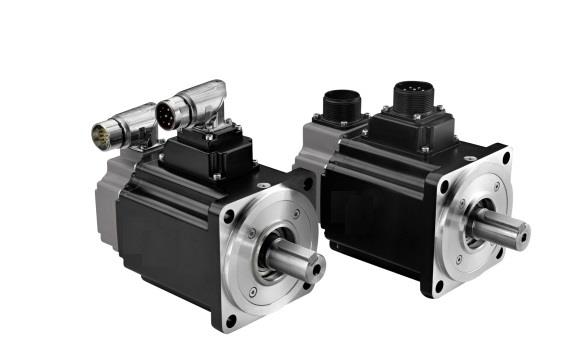
Stepper motors with closed-loop technology are gradually infiltrating into servo applications
In more and more high-standard industrial automation applications, advances in technology are changing the performance-cost ratio between stepper motors and servo motors.
With closed-loop technology, lower-cost stepper motors are steadily penetrating into applications that were originally dominated by high-cost servo motors.
Stepper motor and servo motor
According to conventional wisdom, servo control systems perform better in applications that require speeds in excess of 800 RPM and require high dynamic response. Stepper motors are more suitable for applications with lower speeds, low to medium accelerations, and/or requiring higher holding torque.
So what is the basis for this traditional concept of stepper motors and servo motors?
structure
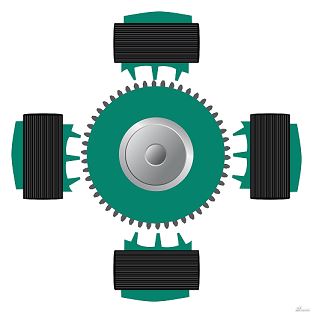
The stepper motor rotates in a stepwise manner, and the magnetic coil is used to gradually pull a magnet from one position to the next. To move the motor 100 positions in any direction, the circuit requires 100 steps of the motor. Stepper motors use pulses to achieve incremental motion, enabling precise positioning without the use of any feedback sensors.
The motion method of the servo motor is different. It connects a position sensor – the encoder – to the magnetic rotor to continuously detect the exact position of the motor. The servo monitors the difference between the actual position of the motor and the command position and adjusts the current accordingly. This closed loop system keeps the motor in the correct state of motion.
Simplicity and cost
Stepper motors are not only less expensive than servo motors, but are also easier to commission and maintain. The stepper motor is stable at rest and can maintain position (even with dynamic loads). However, if some applications have higher performance requirements, more expensive and more complex servo motors must be used.
Positioning
There are important differences between stepper motors and servo motors in applications where you need to know the exact position of the machine at all times. In open-loop motion applications controlled by stepper motors, the control system assumes that the motor is always in the correct state of motion. However, after a problem, such as a motor stall due to a component jam, the controller cannot know the actual position of the machine, resulting in a lost position. The closed loop system of the servo motor itself has an advantage: if it is caught by an object, it is detected immediately. The machine will stop operating and will never lose its position.
Speed and torque
The difference in performance between stepper motors and servo motors stems from their different motor designs. The number of poles of the stepper motor is much higher than that of the servo motor. Therefore, the stepping motor rotates one full turn, and the required number of winding current exchanges is much higher, resulting in a rapid drop in torque in the case of increased speed. In addition, the stepper motor may lose speed synchronization if the maximum torque is reached. For these reasons, servo motors are the preferred solution in most high speed applications. In contrast, the number of poles of a stepper motor is advantageous at low speeds because the stepper motor has a torque advantage over a servo motor of the same size.
Heat and energy consumption
Open-loop stepper motors use a fixed current and dissipate a lot of heat. Closed loop control only provides the current required by the speed loop, thus avoiding motor heating problems.
Comparison of stepper motor and servo motor
The servo control system is best suited for high speed applications involving dynamic load changes, such as robotic arms. Stepper control systems are better suited for applications that require low to medium acceleration and high holding torque, such as 3D printers, conveyor belts, and countershafts. Because stepper motors are less expensive, the cost of the automation system can be reduced after use. If the motion control system needs to take advantage of the characteristics of the servo motor, it must prove that these higher cost motors are worthwhile.
Driven by the advancement of closed-loop technology, stepper motors can penetrate into high-performance, high-speed applications that were previously completely servo motors.