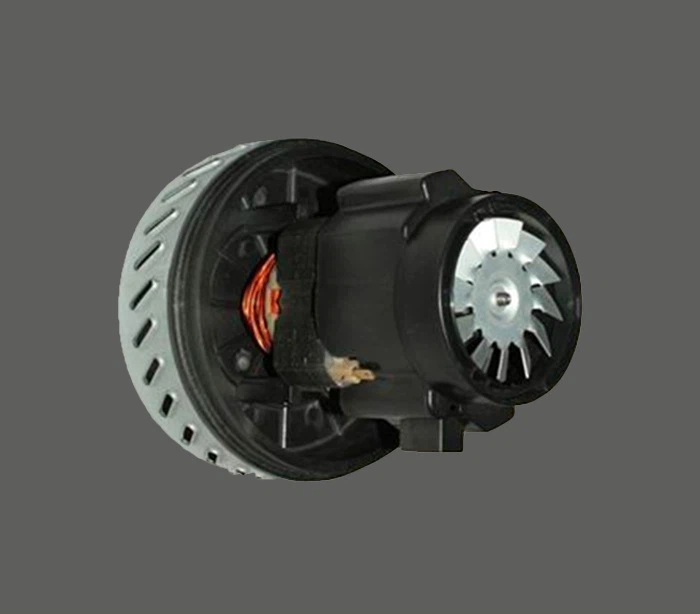
single-phase series motor mechanism
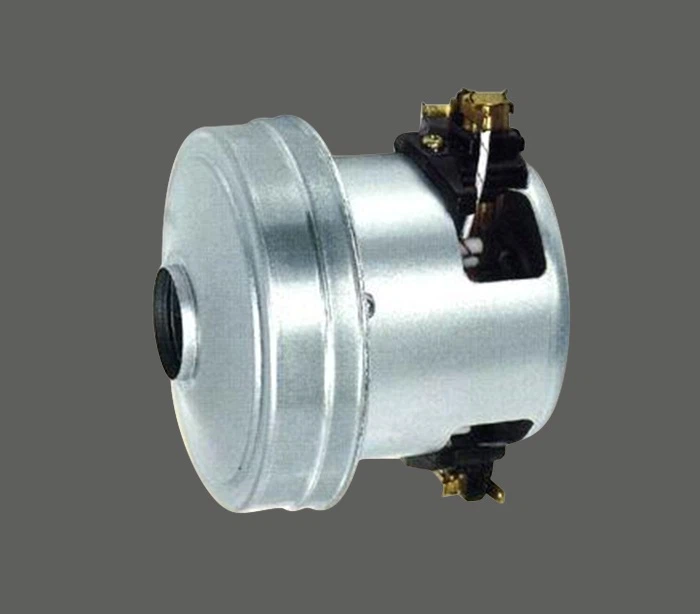
The structure of the single-phase series excitation (series excitation) motor is basically the same as that of the DC series excitation motor.
The stator consists of an iron core and an excitation winding, and the rotor consists of an iron core, an armature winding, a commutator and a rotating shaft. The excitation winding and the armature winding are both wound windings, and the two form a series circuit through the carbon brush and the commutator, which is also the origin of the series excitation.
The stator winding, that is, the field winding generally has only one pair of magnetic poles. The coil of the rotor winding, that is, the armature winding, is not closed, and a closed loop is formed only when the carbon brushes are in contact.
The working principle of single-phase series motor
The structure of the series motor and the DC series motor is the same, so the instantaneous working state of the two is the same. We can first understand the working principle of the DC series motor, and then change it slightly to understand the work of the series motor. principle.
The working principle of the series excitation motor is relatively simple, as it was mentioned in the previous textbook.
Current enters the coil on the left, passes through the rotor winding, and exits the coil on the right. According to the magnetic effect of the current, the stator winding will generate a magnetic field whose direction is from N to S in the figure. Because the direction of the current is fixed, the direction of the magnetic field is also fixed.
At the same time, the rotor winding into which the current flows will be affected by the electromagnetic force, and the direction of the force can be judged according to the left-hand rule. The coils in the range of the N and S poles are subjected to the same amount of force, but in different directions, and the electromagnetic torque will cause the rotor to start to rotate.
Due to the electromagnetic force plus inertia, after the rotor rotates for half a circle, because of the existence of the commutator, the direction of the current flowing into the rotor coil will change, so that the direction of the force in the range of N and S will remain unchanged, and the rotor will continue to rotate. go down.
This is the working principle of the DC series motor. Because the single-phase series motor is connected to alternating current, the direction of the current is constantly changing, and the direction of the magnetic field generated by the stator winding is also changing, but the current direction of the rotor winding changes synchronously. , so the force direction of the rotor will not change.
Characteristics of single-phase series excitation (series excitation) motors
The series motor has the advantages of starting without capacitors, fast speed, and large starting torque, but it also has disadvantages such as high noise, easy wear of carbon brushes, and strong electromagnetic interference.
Why can the speed of the series motor be very high?
The speed of the series motor is relatively high, which can reach tens of thousands of revolutions, or even higher. Like a hand drill, the motor speed is above 6000 rpm.
Why does the series motor have the characteristics of large starting torque?
First look at the torque formula: T=Ct*Φ*Ia, where Ct is the torque constant, which is related to the motor structure; Φ is the air gap flux; Ia is the armature current. It can be seen that when the motor is determined, the torque of the series motor is mainly related to the magnetic flux and armature current.
The previous article has already learned that the winding will induce back EMF when cutting the magnetic flux line. The higher the speed, the greater the back EMF, and the greater the restriction on the winding current.
For the series motor, the position of the stator magnetic field is fixed. At the moment of power-on, the rotor and the stator are relatively static, and there is no cutting magnetic flux lines, so there is no back electromotive force. The current is very large at this time, the magnetic flux and armature current are also large, and the generated electromagnetic torque is also large. As the rotational speed increases, the back EMF increases, the current decreases, and the torque decreases.
This is a feature of the series motor. The slower the speed, the greater the torque. We should have this feeling when using hand-held power tools.
Since a series motor does not need a capacitor to start, what does the capacitor in the power tool do?
The series motor does not need starting capacitors or running capacitors. Adding capacitors is mainly used for filtering, which is used to improve electrical characteristics, reduce carbon brush sparks, improve motor life, and reduce electromagnetic interference.