


1. Motor integrity standard
1). Parts quality
a. The shell is complete without obvious defects, the paint color on the surface is consistent, and the nameplate is clear.
b. The quality of lubricating grease meets the requirements, the amount of oil is appropriate, and there is no oil leakage.
c. There is no ash and oil pollution inside the motor, and the air duct is unobstructed.
d. The enclosure protection ability or explosion-proof performance is good, which not only meets the factory standard of the motor, but also meets the requirements of the surrounding environment. 1.1.5 There is no aging, discoloration and loosening of the stator and rotor windings and iron cores, and the slot wedges, end pads and binding wires are complete and fastened.
e. The gap between the stator and rotor meets the requirements.
f. The fan blades are complete, the angle is suitable, and the fixing is firm.
g. The shell has a good and obvious grounding (connected to zero) line.
h. The bolts and nuts of each component are fully tightened, and are regular and appropriate.
i. The embedded thermometer is complete, the wiring is complete, and the thermometer indicator is correct
j. The starting device is easy to use, and its performance meets the requirements of the motor.
k. The ventilation system is complete, the anti-rust paint does not fall off, the air duct does not leak air, the air filter and air cooler have good performance, and the fan runs normally.
l. The excitation device runs stably and reliably, and the DC voltage and current can meet the requirements of the motor.
m. The paint of the operation panel is in good condition, the components are complete, the wiring is normal, and the marking is obvious.
n. The protection, measurement, signal and operation devices are complete, the instructions are correct, and the action is flexible and reliable.
o. The motor foundation is intact.
p. The power line wiring is correct and firm, the phase sequence marks are clear, and the cable sheath has a good grounding (zero) line.
2). Operating status
a. Running at rated voltage, it can meet the data requirements of the nameplate, and the temperature rise of each part does not exceed the allowable value listed in Table 1. Table 1 The maximum allowable temperature rise of the motor (when the ambient temperature is 40~C) ℃ Insulation class A-class insulation E-class insulation B-class insulation F-class insulation H-class insulation Measurement method Thermometer method Resistance thermometer method Resistance thermometer method Resistance thermometer Resistance method Iron core and other parts in contact with windings 60 —— 75 —— 80 —— 100 —— 125 —— Slip ring or commutator —— Sliding bearing 40 —— 40 —— 40 —— 40 —— 40 —— Rolling bearing 55 —— 55 —— 55 —— 55 —— 55 —— Motor winding 50 60 65 75 70 80 85 100 105 125
b. The vibration value of the motor (twice the amplitude value) should generally not be greater than that specified in Table 2. For Y series motors, the effective values of no-load vibration and speed should not exceed the data listed in Table 3. Table 2 Permissible vibration value of motor Speed, r/min 3000 2000 1500 1000 750 and below Double amplitude value, mm 0.06 0.085 0.10 0.13 0.16 , mm 56≤H≤132 132≤H≤225 225≤H≤400 400≤H≤630 Number of revolutions n,r/min 600≤n≤1800 1800<n≤3600 600≤n≤1800 1800<n≤3600 600 ≤n≤1800 1800<n≤3600 600≤n≤1800 1800<n≤3600 Vibration limit, mm/s 1.8 1.8 2.8 2.8 4.5 4.5 2.8 2.8
c. The axial movement of the rotor of the sliding shaft motor shall not be greater than that specified in Table 4. Table 4 Permissible value of rotor axial movement of sliding shaft motors Motor capacity, kW Axial movement range, mm 2% of the diameter of the motor journal with a neck larger than D200mm
d. The surface of the commutator and the collector ring is smooth, the contact between the brush and the commutator (or the collector ring) is good, and there is no spark in operation. The grade of the brush meets the requirements of the meter, and the pressure of the brush is appropriate and uniform, generally 15-25kPa, and the unit pressure difference of each brush on the same brush holder group shall not be greater than 10%.
e. The running sound is normal. 1?2?6 Insulation resistance is not less than 1MQ per kV in thermal state.
3).Technical data
a. With nameplate data card and ledger.
b. An equipment file must be established for the electric motor, the main contents of which include: main technical parameters other than the nameplate data; installation and commissioning records; records of previous inspections, tests and structural improvements; accumulated running time records; accident and rating records.
4). Equipment and its environment
a. The main and auxiliary machines are neatly installed, and the surface is clean and dust-free.
b. The surrounding environment is clean and tidy, and there are no phenomena such as running, running, dripping, and leaking that affect the operation of the motor.
2. Classification of asynchronous motor maintenance
(1) Minor repairs
a. The motor is inspected without removing the end cover, and external cleaning is performed;
b. Check whether the lead head is overheated, and fasten the connecting screws;
c. Check the bearing lubricating oil for discoloration or lack of oil;
d. Measure motor insulation resistance and absorption ratio;
e. Check the housing ground wire;
f. Check the condition of the ventilation system;
g. Check the wear of the axial current collector rings, the wound rotor collector rings and the brushes, check the brush holder spring, the collector ring lift short-circuit device and clean the dust.
(2) Intermediate repair
a. Including minor repairs
b. The motor is disassembled and the rotor is pulled out
c. Before and after disassembly, measure the insulation resistance and absorption ratio;
d. Before and after repair, measure the air gap between stator and rotor;
e. Check and clean the stator and rotor wedges, end binding wires, spacers and end hoop bindings;
f. Check the rotor short-circuit ring and copper bars;
g. Check and clean the bearing and lubrication system;
h. Check rotor blades and balance weight device; i. Check and process rotor bracket welds; ’ ’
j. Check the stator winding thermometer;
(3) Overhaul (restorative repair)
a. Including middle school content;
b. According to the degree of insulation aging and fault conditions or test results, partially or fully replace the stator winding or rotor winding;
c. Replace the rotor squirrel cage bars or short-circuit rings; , , '. ,
d. After the rotor is changed or when the vibration exceeds the allowable value during operation, perform a dynamic balance test;
3. Maintenance methods and quality standards;
1). Disassembly and assembly of the motor
a. Remove the external wiring of the motor and make a mark, then loosen the anchor screw to separate the motor from the transmission machine.
b. Remove the connecting pieces (couplings or pulleys) on the motor shaft extension with the removal tool clips (also known as pullers). 3.1.3 Remove the bearing outer cover of the motor with rolling bearing, and remove the motor end cover. Before dismantling, be sure to mark the joint between the end cover and the base shell (the marks on the front and rear cover should not be the same), and measure the gap between the stator and the rotor.
c. Remove the brush from the brush holder. For DC motors, mark the position of the neutral wire of the brushes.
d. Pull out the rotor or remove the stator. When the rotor weight is less than 35kg, pull out by hand; for larger rotors, use a lifting tool to pull out.
2) There are several ways to remove the bearing.
(1) Disassemble with a puller.
a. Hook the inner ring of the bearing with the hook and tighten the screw.
b. Quickly pour the oil heated to about 110°C on the inner ring of the bearing, or heat it with a bearing heater to make it expand by heat. c. Tighten the screw again to pull the bearing down.
(2) Disassemble with a copper rod.
Put a copper rod on the inner ring of the bearing, and knock the copper rod with a hand hammer to knock out the bearing. When knocking, it is necessary to strike evenly along the opposite sides of the inner ring of the bearing in turn, not just one side, and not too much force.
(3) Rest on the cylinder and disassemble.
Clamp the shaft with two iron plates under the inner ring of the bearing, rest it on a cylinder (the inner diameter of the cylinder is slightly larger than the outer diameter of the rotor), place a copper block on the end face of the shaft, and align the center of the shaft with a hand hammer. Knock to make the bearing come out, or the bearing can be pressed off on the press machine.
The assembly of the motor after inspection shall be carried out in the reverse order of disassembly. The difference between the stator and rotor air gaps at each point on the circumference shall not exceed ±10% of the arithmetic mean.
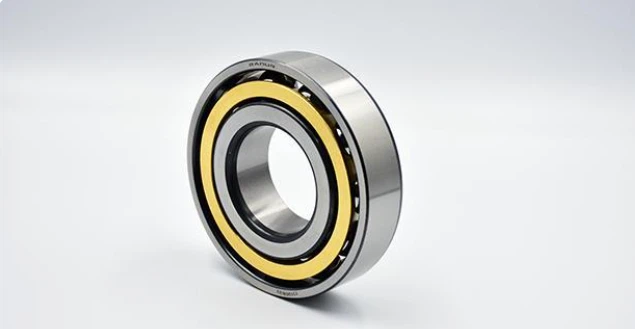
3). Overhaul of rolling bearing
(1). Cleaning and inspection;
a. After confirming that there are no obvious defects in the bearing, carry out the cleaning work. Carefully pry off the sealing cover of the sealed bearing and store it properly. Use a non-metallic sheet to scrape off the old grease from the bearings and the inner and outer bearing caps. Then use kerosene, light diesel oil or transformer oil at 90~100℃ to dissolve the remaining grease, and blow it clean.
b. Check the parts of the bearing for scratches, cracks, cracks, spots, burns and rust; use a feeler gauge to check the wear condition, when the inner and outer rings roll relative to each other, whether they are brisk, even, flexible, and whether there is noise, block, stuck or excessive loose phenomenon.
c. Rinse with washing oil and wipe dry with clean white silk. It is forbidden to use cotton gauze to wipe.
d. At the same time, clean and inspect the inner and outer covers of the bearing, oil filling holes, oil filling pipes, oil cups and journals.
(2) Quality standard:
a. The parts of the bearing are free of spots, scratches, cracks, burns, rust, etc.
b. The bearing rack has no friction, jamming and excessive looseness. The idle bearing is flexible, uniform and no noise.
c. Bearing clearance and wear are as specified in Table 27. Table 27 Rolling bearing clearance and wear allowable value Bearing inner diameter mm Radial clearance, mm Maximum allowable wear value mm -80 0.01-0.02 0.06-0.08 0.20 85-120 0.02-0.03 0.08-0.10 0.30 130-150 0.02-0.04 0.10-0.12 0.30 d.

(3) Impregnation and drying of low-voltage motor windings (insulation treatment)
Commonly used impregnating paint Name Model Heat resistance grade Characteristics and use Solvent Drying time, h Melamine alkyd paint 1032A30-1 B Moisture resistance, oil resistance, good internal drying, high mechanical strength, and arc resistance. Impregnated motor windings for use in humid tropical regions. Xylene, No. 200 solvent gasoline 1.5-2 (105℃) Polyester impregnating paint 155Z30-2 F Good heat resistance and electrical properties, strong adhesion. Impregnable Class F motors. Xylene, butanol 1-3 (130℃) Dip method. Generally, three methods of immersion, roll dipping and pouring paint are used. Immersion is the immersion of the entire stator in the lacquer, allowing the lacquer to penetrate and fill the winding voids. Roll dipping is to let the insulating paint immerse part of the winding, and rolling the iron core makes the winding ends and slots penetrate and fill the insulating paint. Dipping is to pour the insulating paint into the winding and the groove with a spoon to achieve the purpose of infiltration and filling.
drying method
a. Oven drying method. The structure principle of hot air circulation drying room. The heat source includes electric heating wire, steam or gas radiating pipe, etc. Use a blower to blow hot air into the oven to heat the workpiece. Exhaust and intake are controlled by valves.
b. Bulb drying method. Place the motor stator between the bulbs, preferably infrared bulbs, pay attention to the temperature in the box, and keep the exhaust air unobstructed. The bulb should not be too close to the motor, and the power should be selected at about 5 kW per cubic meter of volume.
c. Electric drying method. Add 10% to 15% of the rated voltage to the three-phase windings of the stator, or connect the three-phase windings in series, and pass in 50% to 70% of the rated current. Pay attention to the winding temperature and adjust the voltage over time to maintain the proper current.
(5) Quality standard
a. A denser, firmer and smoother paint film is formed on the surface of the winding.
b. During the drying process, the insulation resistance is measured once per hour. When the insulation resistance measured for three consecutive times is basically unchanged, the drying is qualified. .
c. AC withstand voltage test conforms to this regulation
4 Commissioning and acceptance
1). Maintenance test items and standards
(1) Measurement of winding insulation resistance
a. For low-voltage motors: generally use a 500-1 000 V megohmmeter. Its insulation resistance should not be lower than 0.5M, and the motor whose windings are replaced should not be lower than 5MQ.
b For high voltage motors, a 2 500 V megohmmeter is generally used. Its insulation resistance should not be lower than 1M per dry volt.
c. To judge whether the winding insulation is damp, use a megohmmeter to measure its insulation resistance. When the absorption ratio R60/R15 ≥ 1.3, it means that the motor is not damp. R60 and R15 represent insulation resistance at 60 s and 15 s, respectively.
(2) The insulation resistance of the bearing seat to ground is measured with a 500V megohmmeter, not less than 0.5MQ.
(3) Determination of DC resistance a The difference between the measured DC resistance values of each phase winding shall not be greater than 2%. b. The DC resistance value converted to the same temperature or 75 ℃, compared with the manufacturer or the original record, the difference is not more than ± 2%.
(4) No-load test
a. Before the air test, make preparations for the test run according to Article 4.2 of this regulation.
b. During the no-load test, a three-phase balanced rated voltage is applied to the stator windings of the motor without any load on the motor bearings.
c. When the voltage is symmetrical and equal to the rated voltage ue, the deviation of the no-load current of any one phase from the average value of the three-phase current shall not be greater than 10% of the average value. The three-phase line voltage and line current shall not differ by more than 5% compared with the previously measured values.
d. No-load current I. See Table 39 for percentage of rated current Ie. When the difference is too large, the cause should be identified and dealt with. Table 39 Motor no-load current and rated current percentage series Motor rated capacity, KW below 0.125 below 0.5 below 5 2.2 below 10 below 55 below 125 below 2 70-95 50-70 40-55 30-45 23-35 18-20 4 80-96 60-85 45-60 35-55 25-40 20-30 6 85-98 70-90 50-65 35-65 30-45 22-33 8 90-98 75-90 50-70 37-70 35-50 25-35 e. For motors with a capacity of 200 kW and above, the no-load inspection time is not less than 4 hours; for motors with a capacity of less than 200 kW, the no-load inspection time is not less than 1 hour (based on the bearing temperature stability).
2). Preparation before test drive
(1) General inspection. Check the assembly of the motor, such as whether the fastening screws of each part are tightened; whether the lead wire is marked correctly; whether the lubricating oil used in the sliding bearing meets the requirements; the assembly of the brush; the contact between the brush and the collector ring or commutator situation etc.
(2) Turn the rotor for more than three revolutions to check for wear. The bearing should be smooth, brisk, and the sound should be even and without noise. The radial deviation of the shaft extension is in accordance with the provisions of Table 40. Table 40 Allowable value of radial deviation when the shaft rotates mm Shaft extension diameter Allowable deviation Shaft extension diameter Allowable deviation 6~10 0.025 >50~80 o. 060 >10~18 o. 030 >80~120 0.080 >18~30 0.040 >120~180 O. 100 >30~50o. 050
(3) Check whether the maintenance data and test data are complete, and whether the maintenance quality and test results meet the requirements and standards.
(4) Check whether the control equipment and relay protection devices are overhauled and meet the requirements. .
3). Test drive
(1). The test run is divided into two types: no-load test run and load test run. It is advisable to carry out the no-load test run in the laboratory, and the load test run is generally carried out on the production site. During the test run, it is necessary to record the running voltage, running current, stator temperature rise, bearing temperature rise, measure vibration, and check for abnormal noise and abnormal conditions.
(2). Test run time regulations:
a. The no-load test run time shall be implemented in accordance with the provisions of 4.1.4e.
b. After the middle repair, gradually increase the full load and run for more than 8 hours
c. After overhaul, gradually add full load to run for more than 24 hours.
4). Acceptance
(1). Acceptance criteria:
a. The direction of rotation of the motor is correct.
b. The magnitude and deviation of the no-load current comply with the provisions of 4.1.4c and d.
c. The starting current and starting time are consistent with the factory data or with historical records.
d. During the specified test run time, the operation conditions meet the requirements of this Regulation 1.
(2) The technical leaders of the relevant units confirm that the test run is normal and meets the acceptance standards, and the acceptance work is completed after signing the completion acceptance letter.
5. Maintenance and overhaul safety precautions
1). Maintenance safety precautions
(1). First, check whether the motor casing is live and whether the grounding (zero) is good. Maintenance work can only be carried out when the enclosure is de-energized and grounded (zero). ,
(2). Maintenance personnel must wear qualified work clothes, work caps, and electrician shoes. The cuffs should be tied tightly, and the braids of female workers should not be exposed. Gloves are strictly prohibited for maintenance work.
(3). All parts of the human body and maintenance tools (such as auscultation rods, grease guns, etc.) should not touch the rotating parts.
(4) When adjusting or replacing the brush, do not touch different conductive parts or touch the conductive parts with one hand and the ground with the other hand. Strictly prevent the brushes and conductive parts from being grounded. Two people are not allowed to adjust or replace the brushes at the same time on the same motor.
(5) It is forbidden to cover the running motor with canvas. If the motor must be protected, it can be covered with wooden board or metal cover, but the cooling condition of the motor shall not be deteriorated. .
(6). It is forbidden to arbitrarily increase the fuse or fuse in the same circuit of the motor protection. It is forbidden to replace the fuse with metals such as copper wire and iron wire.
2). Maintenance safety precautions
(1) A fire permit must be obtained when a fire is carried out in a fire-prohibited area. There should be sufficient fire extinguishing equipment and safety lighting at the maintenance site. (2) When working in the stator of the motor, it is not allowed to carry small metal objects, and it is forbidden to wear shoes with nails.
(3). When overhauling the motor on a large-scale foundation, safety measures should be taken to prevent the maintenance personnel from falling.
(4). When overhauling a synchronous motor with an electric crank, safety measures should be taken to prevent the mis-feeding of the crank.
(5) The rotor poles of the convex plate synchronous motor should be disassembled and assembled symmetrically, and attention should be paid to maintaining the balance of the rotor.
(6) The following points should be paid attention to in the process of motor lifting, dismantling core pulling, and parts storage:
a. Prevent damage to the cable end.
b Make the reset mark of main parts such as thread head, end cap, brush holder, etc., and put the small parts into special plastic bags.
c Before pulling out or installing the rotor, protect the journal, collector ring, commutator and winding ends to avoid the impact of the steel wire rope. After pulling out the rotor, check the winding, iron core, slot wedge, end binding, etc. for bumps in time, and repair the bumped parts in time.
d. The part where the wire rope is tied to the rotor must be lined with wooden pads.
(7) It is forbidden to beat the winding with metal objects. Use wood, bamboo or insulating fiberboard to clean the winding dirt.
(8) When flushing the motor with steam and water, the flushing pressure should be controlled at o. 1 to o. 15MPa range.
(9) When using compressed air to blow dust, pay attention to air filtration, and no water can be blown onto the windings.
(10) When local fault management or winding replacement, attention should be paid to the protection of other windings. When embedding soft windings, do not damage the insulation of the wires and the insulation of the slots.
(11) When using tools to remove the bearing, be careful to protect the thimble hole of the shaft.
(12) The baking motor should have a special person on duty, specify the baking temperature range, and make a baking record.
(13) Open flames shall not contact the volatiles of insulating paint or insulating materials.
(14) There shall be no less than two persons during the high-voltage test of the motor. The test site should be shielded, and a warning sign should be hung, and a special person should be sent to guard it. (15) After measuring the insulation or high voltage test, the motor winding should be discharged to the ground several times.
(16) Before closing the stator, check for forgotten objects in air gaps, ventilation channels and other cavities.
3). Precautions for safety in commissioning
(1) Before the load test, it is necessary to test the rotation direction of the motor alone to check whether it is consistent with the direction required by the process.
(2) During the commissioning process, once abnormal conditions such as abnormal noise, burning smell, smoke and fire, severe vibration, over-temperature, over-current, etc. are found, the vehicle should be stopped immediately.
(3) In the cold state, it is allowed to start up to 3 times continuously, with an interval of about 5 minutes each time. Only one start is allowed in the hot state. When dealing with an accident, multiple starts are allowed.


