


Linear motor working principle
The side that evolved from the stator is called the primary, and the side that evolved from the rotor is called the secondary. In practical applications, the primary and secondary are manufactured to different lengths to ensure that the coupling between the primary and secondary remains constant over the desired range of travel. The linear motor can be a short primary long secondary or a long primary short secondary. Considering the manufacturing cost and operating cost, take the linear induction motor as an example: when the primary winding is connected to the AC power source, a traveling wave magnetic field is generated in the air gap, and the secondary will induce an electromotive force and generate a current under the cutting magnetic field cutting. The current reacts with the magnetic field in the air gap to generate electromagnetic thrust. If the primary is fixed, the secondary moves linearly under the action of the thrust; otherwise, the primary performs a linear motion. Linear motor drive control technology A linear motor application system must not only have a linear motor with good performance, but also a control system that can achieve technical and economic requirements under safe and reliable conditions. With the development of automatic control technology and microcomputer technology, there are more and more control methods for linear motors.
The research on linear motor control technology can be basically divided into three aspects: one is traditional control technology, the other is modern control technology, and the third is intelligent control technology.
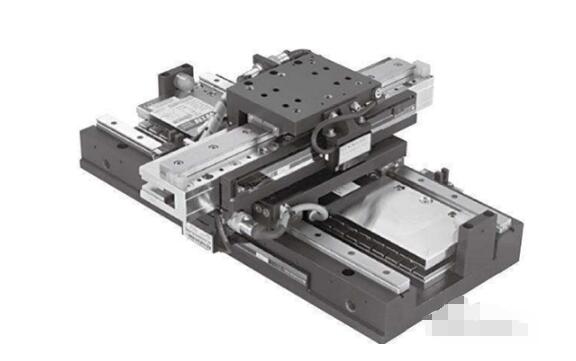
Traditional control technologies such as PID feedback control and decoupling control have been widely used in AC servo systems. Among them, PID control implies information in the dynamic control process and has strong robustness. It is the most basic control method in AC servo motor drive system. In order to improve the control effect, decoupling control and vector control techniques are often used. The traditional control technique is simple and effective under the condition that the object model is determined, does not change, and is linear, and the operating conditions and operating environment are determined to be constant. However, in high-performance micro-feeding high-performance applications, changes in object structure and parameters must be considered. A variety of non-linear effects, changes in the operating environment and environmental disturbances, such as time-varying and uncertain factors, can achieve satisfactory control results. Therefore, modern control technology has attracted a lot of attention in the research of linear servo motor control. Commonly used control methods are: adaptive control, sliding mode variable structure control, robust control and intelligent control. It mainly combines fuzzy logic, neural network with existing mature control methods such as PID and H∞ control to learn from each other to obtain better control performance.
The company focuses on the production of paper shredder gear motor.


