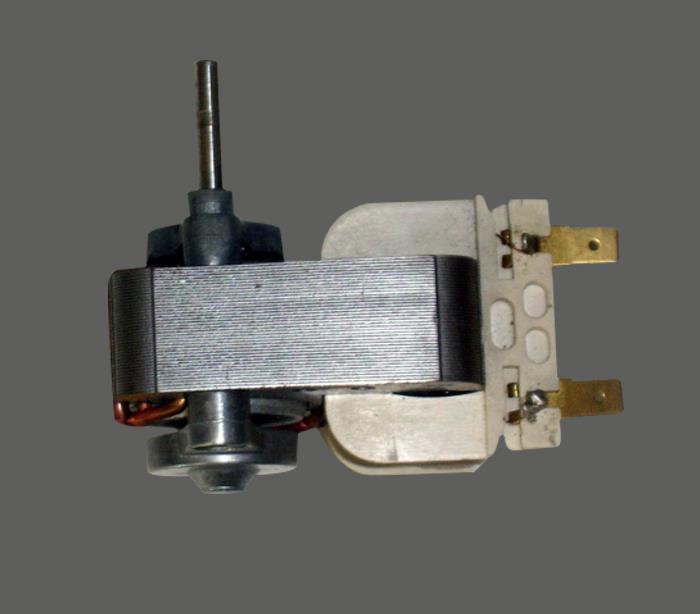
If you want to buy buy Induction motors, understand how it works
The working principle of induction Motors
Induction Motors, also known as "asynchronous Motors," are devices that place the rotor in a rotating magnetic field and obtain a turning moment under the action of a rotating magnetic field, so that the rotor rotates. The rotor is a rotating conductor, usually in a rat cage.
Through the relative motion of the rotating magnetic field generated by the stator(whose speed is synchronous speed N1) and the rotor winding, the rotor winding cuts the magnetic inductive wire to generate an induced electromotive force, which causes the induction current to be generated in the rotor winding. The induction current in the rotor winding acts with the magnetic field to generate electromagnetic torque that causes the rotor to rotate. As the rotor speed gradually approaches the synchronous speed, the induction current gradually decreases, and the resulting electromagnetic torque decreases accordingly. When the asynchronous motor is operating in the motor state, the rotor speed is less than the synchronous speed. In order to describe the difference between the rotor speed N and the synchronous speed N1, a slip rate(slide) is introduced.
The working principle of induction Motors
Induction Motors, also known as "asynchronous Motors," are devices that place the rotor in a rotating magnetic field and obtain a turning moment under the action of a rotating magnetic field, so that the rotor rotates. The rotor is a rotating conductor, usually in a rat cage.
Through the relative motion of the rotating magnetic field generated by the stator(whose speed is synchronous speed N1) and the rotor winding, the rotor winding cuts the magnetic inductive wire to generate an induced electromotive force, which causes the induction current to be generated in the rotor winding. The induction current in the rotor winding acts with the magnetic field to generate electromagnetic torque that causes the rotor to rotate. As the rotor speed gradually approaches the synchronous speed, the induction current gradually decreases, and the resulting electromagnetic torque decreases accordingly. When the asynchronous motor is operating in the motor state, the rotor speed is less than the synchronous speed. In order to describe the difference between the rotor speed N and the synchronous speed N1, a slip rate(slide) is introduced.