


All coil winding or cable manufacturing processes require high-quality tension control.
How to circle the motor coil?
There are many kinds of motors, and the winding system of each motor coil is also different. Some small motors are like the size of an egg, the core cavity diameter of the large motor, some is 70 or 80 centimeters, the repair personnel can repair work in the motor core. This size gap in their coil winding steps are not the same. Such as the hand drill rotor repair repair only need to understand the line diameter, the number of turns, pitch processing between the groove can be directly hand around. And the single-phase and three-phase asynchronous motor or large motor winding steps are more.
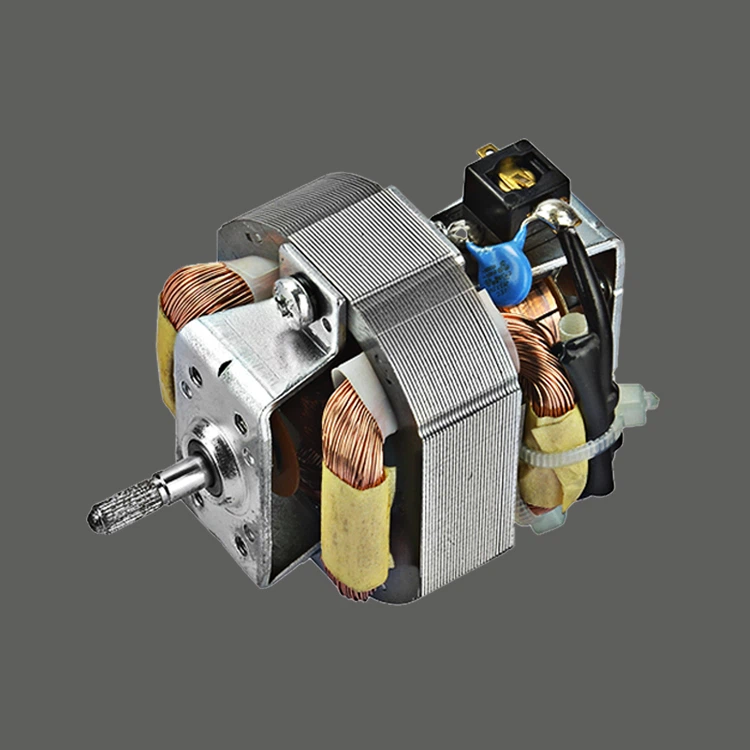
Because there are many types of motors, the steps around the coil are less and different, so it is impossible to introduce all kinds of motor coil making steps one by one. Single-phase and three-phase small-power motors are their coil winding steps.
The tension actually applied to the wire during the winding process has a direct impact on both the wire elongation rate and the final coil volume and size, not to mention the basic disconnection caused by the tension control instability, which is also one of the main sources of wire fracture.
Single phase 220V motor stator fault is mostly 24 bad, magnetic poles are mostly 2 poles, 4 poles, the primary and secondary winding is mostly concentric, and the number of three-phase asynchronous motor groove: 18,24,30,36, etc.,: winding form is: single layer concentric, single chain, single layer cross, single layer mixing, double layer, and double layer winding... and other winding forms.
Regardless of the form of the winding, the first step: to first know that the winding form is a single layer of concentric, single chain, single cross, and pitch data. To grasp the coil size. Master the size of the online template is finalized.
The second step: to check out the number of turns, parallel root number, parallel wire diameter, series coil number, motor pole number, and winding parallel branch road, etc.
The third step: to repeatedly test the size of the coil model size, the large coil will be out of the lip to touch the motor end cover, causing grounding failure, small is not easy to downline, only not small can be appropriate.

Factors affecting the motor loss
The loss of the motor consists of stator copper consumption, rotor copper consumption, iron loss, wind friction consumption and miscellaneous consumption. Taking cage motor as an example, someone made statistics and calculation through a large number of test data, stator copper loss accounted for the largest proportion, between 25-40%, followed by iron loss, accounting for 20-25%, rotor copper consumption accounted for 18-23%, wind friction consumption accounted for 5-15%, and miscellaneous consumption accounted for 5-10%. According to different losses, in different stages, using different methods to control, can achieve the ultimate goal of improving the motor efficiency.
At the same time, in the motor production, the motor manufacturing process winding process is one of the most important processes, and is also the key to improve the overall equipment performance, improve productivity.
question
1. The winding quality is not stable
Cable acceleration and deceleration, that is, when the violent speed change, it is easy to occur the wire tension change, resulting in the gap, overlap and other uneven winding phenomenon.
2. Winding track deviation
3. Axis does synchronous control. Due to the different phase of each axis and the main axis, the winding trajectory may shift due to the delay, and the uneven winding occurs.


