

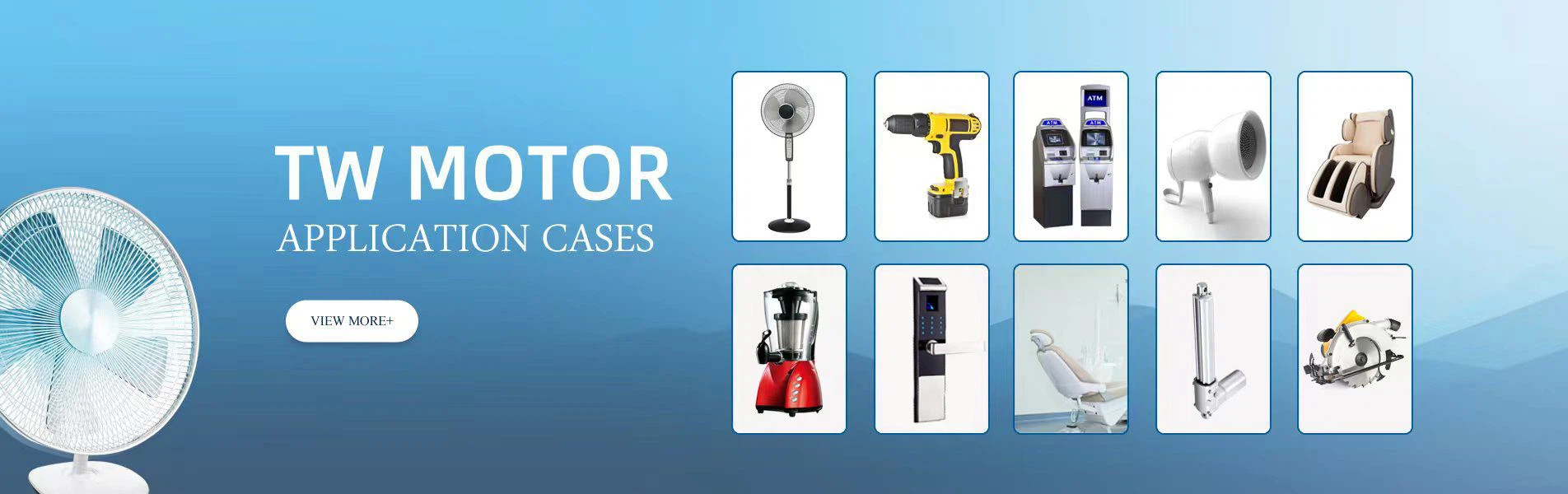
Gear motors can be classified in various ways, mainly based on their gear type, motor type, number of reduction stages, installation method, and application field. According to different application scenarios, gear motors can choose different combinations to achieve efficient power transmission and control.
According to the classification of motor type, it can be divided into the following categories:
1. AC gear motor
·Features: Driven by AC power (AC), common motor types are induction motors and synchronous motors.
·Advantages: High reliability, suitable for long-term continuous operation.
·Application: Suitable for industrial equipment, fans, water pumps, conveyors and other occasions that require continuous operation.
2. DC gear motor
·Features: Driven by DC power (DC), common types are brushed motors and brushless motors.
·Advantages: Easy to control speed and direction, suitable for occasions that require speed regulation or precise control.
·Application: Widely used in small automation equipment, robots, power tools, household appliances, etc.
3. Stepper gear motor
·Features: Driven by electromagnetic pulse signals, the rotation angle is accurate and controllable, and it is often combined with a gearbox to increase torque.
·Advantages: It can achieve precise positioning and speed regulation, suitable for applications requiring high-precision control.
·Applications: Widely used in automated machinery, CNC machine tools, 3D printers and camera equipment.
4. Servo gear motor
·Features: The servo motor is combined with a gearbox, has feedback control function, and can accurately control position, speed and torque.
·Advantages: It has high precision and high response speed, suitable for dynamic adjustment applications.
·Applications: Widely used in high-precision automation equipment, robots, intelligent manufacturing and other fields.


