

The brushless DC motor has the advantages of low temperature rise, low noise, high torque, high speed, high efficiency (stable operation, high reliability, good stability), low energy consumption (eliminates multi-stage deceleration losses, and the comprehensive power saving rate can reach 20 %~60%), no sparks (no sparks, especially suitable for explosive places), long life (continuous use of 30,000 hours) and other advantages.
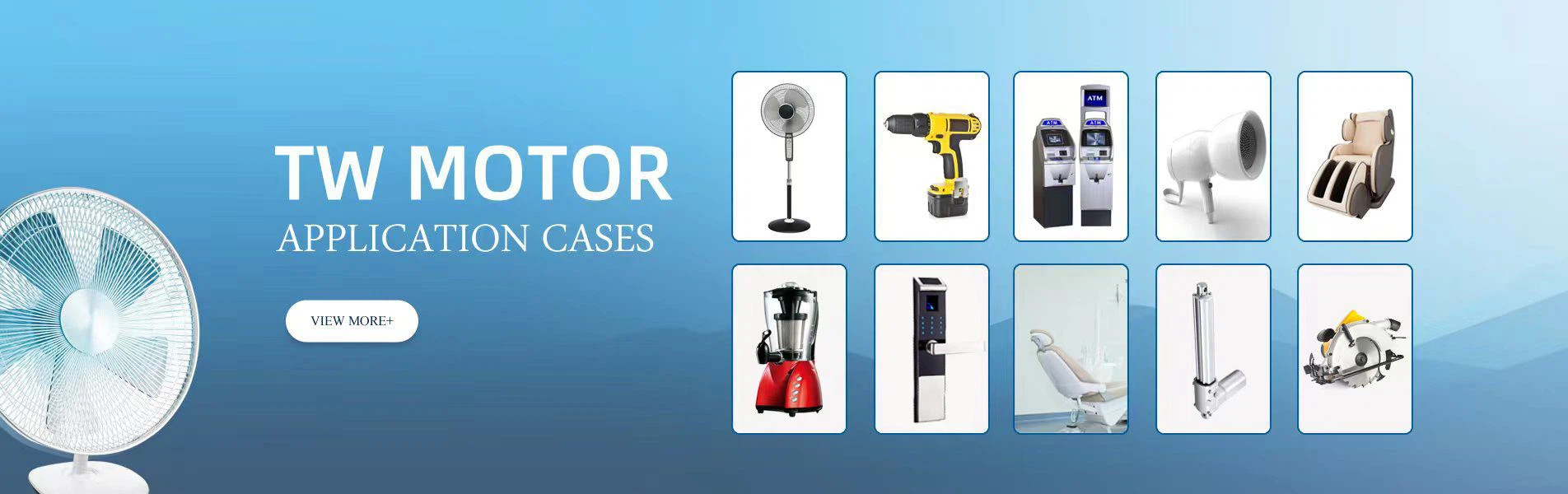
Brushless DC motors are widely used in micro-machines in various industries: such as circulating fans, humidifiers, dehumidifiers, air fresheners, heating and cooling fans, soap dispensers, hand dryers, smart door locks, textile machinery, laser processing machinery , engraving machines, printing machinery, medical equipment, automatic packaging machines, various types of robots, automated production lines, CNC lathes, precision measuring instruments, electronic manufacturing equipment, etc.
★Brushless motor is also called DC variable frequency motor (BLDC) in some fields. It adopts electronic commutation (Hall sensor), and the coil (armature) does not move the magnetic pole. At this time, the permanent magnet can be outside the coil or in the coil. Internally, there is a distinction between an outer rotor brushless motor and an inner rotor brushless motor. The brushless motor construction is the same as the permanent magnet synchronous motor.
However, a single brushless motor is not a complete power system, and the brushless basically must be controlled by a brushless controller, that is, an ESC to achieve continuous operation. What really determines its performance is the brushless electronic governor (that is, the ESC). Generally, there are two kinds of driving currents for brushless motors, one is square wave and the other is sine wave. Sometimes the former is called a DC brushless motor, and the latter is called an AC servo motor, which is exactly a type of AC servo motor.
A permanent magnet brushless DC motor, its rotor is a cylindrical magnet, and there are three stators on the outside consisting of coils, and the stator is equipped with a sensor, usually a Hall element. The work will be activated when the rotor magnetic poles are close, and converted into electrical signals of 6 different states to control the stator coil current.
For example, when the rotor is in a certain position, the 2 and 3 Hall elements near the N pole will be activated, and the controller will turn on the two coils, so that the coil B is magnetized to the S pole, and the coil C is magnetized to the N pole, attracting the rotor to rotate. When the rotor turns to the next position, only the No. 2 Hall element is activated, the controller will turn on the coils A and C, the former is magnetized as the S pole,


