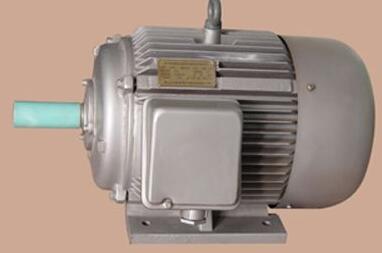
Big motor disassembly and maintenance and precautions
The commonly used bearings for motors are rolling bearings and plain bearings. Different bearing structures have different requirements during assembly, maintenance and disassembly inspection. These contents are what any motor manufacturer and repair and maintenance unit should master. Ms. Participate in the content and share it with you.
Assembly using rolling bearing motors
The assembly and disassembly process is reversed. Before assembly, the parts should be inspected. It is best to check the coaxiality and other geometrical tolerances of the base (the stator with windings at the assembly site), the end cover, the bearing sleeve, the inner and outer covers of the bearing, and the rotor. After assembly according to the specifications of the drawings. For flameproof motors, check the impediment surface for impermissible defects. Before installing the bearing and wearing the rotor, the inner cavity of the stator should be blown clean. The assembly site should be clean and free of dust. The junction box should be installed before the rotor is inserted. For the threaded part of the fastening bolt and the gold working surface, apply 204-1 anti-rust oil. When assembling, the most important part is the bearing and the precautions when assembling the rolling bearing.
(1) Before the bearing is assembled, the components on the inside of the bearing are first installed, such as the inner fan, the balance ring, the curved path ring, and the inner cover of the bearing.
(2) Bearings should be inspected strictly. If there is no inspection equipment on site, it should be carefully selected by experienced workers (lightness, small sound and harmony...).
(3) The bearing should be heated and mounted on the shaft. The heating temperature is about 100 ° C. It can be boiled in oil for 5 to 10 minutes, then immediately loaded onto the shaft and then cleaned after cooling. Small size motors can also be cooled without heating.
(4) Regardless of the cold and hot loading, the bearing will be used to hit the bearing on the shaft.
(5) The marking on the bearing jacket should face outward.
(6) When grease lubrication, the grease should be applied in an appropriate amount.
(7) Greases include sodium, calcium, calcium and sodium, complex calcium, lithium and molybdenum disulfide. At present, the lithium base grease No. 1 to No. 3 is widely used. Customers who use electric motors can choose according to their own habits and experience, and may not fully comply with the grades selected by the manufacturer, but the original grease must be cleaned up when replacing.
(8) After applying the grease, the motor should be installed immediately to avoid contamination of the bearing parts.
Precautions when using a sliding bearing motor
(1) Precautions during disassembly and cleaning
● Open the bearing cap and pull out the bearing bush to thoroughly clean the shaft and bushing and the anti-rust grease on each component. Wipe all of it with a lint-free cloth soaked in gasoline, check the surface of the bearing alloy for damage and the hardness of the alloy bearing alloy.
●The clearance between the bearing bush and the shaft is selected when the motor is shipped from the factory. If there is no damage during the inspection, it is not necessary to repair it.
●The upper tile surface scratches are usually not aligned with the axis. The thrust surface scratches at both ends of the bearing pad indicate that the magnetic center and the mechanical center are greatly offset, and should be adjusted during reassembly.
● When dismantling, carefully observe the traces formed by the bright spots rubbed from the running surface of the bearing bush. Ideally, the width should be evenly distributed along the axial direction at the bottom of the lower tile. If the bright spots formed by the scratches are uneven in width, it may be due to bearing assembly problems or bending of the shaft; the same direction scratches may be the entry of hard particles into the running surface of the bearing bush, or due to the journaling Caused by rough surface. It should be repaired during the inspection (clearing hard particles, grinding the rough surface of the journal with oil stone) or replacing.
● Look at the surface of the bearing bush for any pits caused by electrical corrosion caused by the shaft current. If this is the case, check that the bearing insulation is intact.
● Check if the floating seal inside the bearing can move up and down. If there is a stuck phenomenon, it is usually caused by burrs and can be repaired. Otherwise, the size and shape should be re-examined and replaced if necessary.
(2) Precautions when replacing the bearing bush
● Check the journal to confirm if there are any protruding points or scratches. If there is, it should be removed with oil stone;
● Check if there is a smooth transition between the new bearing bush oil inlet and the inner circle of the bearing bush. Otherwise, it should be repaired;
● Insert the lower half of the bearing bush so that the shaft falls on the lower half of the bearing bush. After three weeks of manual rotation, the shaft will be lifted up, and the lower half of the bearing bush will be turned out to check the trace of the friction spot. Under normal conditions, the traces should be equally wide along the axial direction without skew, and the contact with the journal should contain about 75% of the bright band. If this area is not reached, the existing high point should be gently scraped off, and the lower half of the bearing pad should be reloaded, and the above process should be repeated until the shape and area of the friction track reach the required level.
Do not damage the bearing insulation when turning the tile.
(3) Adding lubricating oil
The replacement of the lubricating oil depends to a large extent on the operating conditions of the motor – load, speed, operating time, operating temperature, etc. After the motor is put into operation, it is checked regularly, and whether the lubricant is replaced or not is mainly based on the inspection results. Generally, the oil-changing cycle of self-lubricating bearings is about 4-6 months; when it is compounded, it is about 2~3 years.
(4) Monitoring of bearing temperature
Bearings are usually fitted with a platinum thermal resistance (Pt100) to monitor the bearing temperature. Sometimes, although the bearing temperature does not exceed the limit, it is abnormal when the change is large. If it suddenly rises more, stop the inspection. The setting of the bearing temperature should be selected as: alarm 85 ° C; cut 90 ° C.