The Universal Motor
The Universal Motor is a type of electric motor that can operate on both AC and DC currents. It is a commonly used motor in household appliances such as blenders, vacuum cleaners, and power tools.
The principle of operation of the Universal Motor is based on the interaction between the magnetic field of the rotor and the electromagnetic field of the stator. The stator consists of a set of laminated iron cores around which copper windings are wrapped. An alternating current is passed through the windings, causing a magnetic field to be created around each core.
The rotor of the Universal Motor is also made of a laminated iron core with a set of copper windings wrapped around it. The rotor is mounted on a shaft that is connected to the output gear or blade of the appliance.
When an electric current is applied to the windings of the rotor, a magnetic field is created around it. The interaction between the magnetic fields of the rotor and the stator causes the rotor to rotate. The direction of rotation can be reversed by reversing the direction of the electric current.
The Universal Motor is capable of producing high torque at low speeds, making it ideal for applications where high starting torque is required. The motor's speed can be controlled by adjusting the voltage or the frequency of the applied electric current. This makes it suitable for applications where variable speed control is required, such as in blender motors.
Blender Application
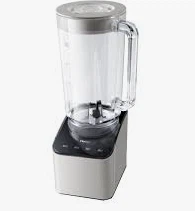
The blender is a kitchen appliance designed for the purpose of mixing and blending food ingredients. It consists of a motor, blades, a jar, and controls. The motor provides the power to rotate the blade, which is mounted on the bottom of the jar.
The Universal Motor is an ideal choice for blender applications because it is capable of producing high torque at low speeds. This allows the blender to easily mix and blend even the toughest of food ingredients.
The blender motor consists of a Universal Motor, a gearbox, and a blade assembly. The Universal Motor is mounted on a base plate and is connected to the gearbox through a coupling. The gearbox is designed to reduce the speed of the motor and increase the torque, thereby providing the necessary power to rotate the blades.
The blade assembly consists of a set of rotating blades that are mounted on a shaft. The shaft is connected to the gearbox through another coupling, which transmits the power from the motor to the blades. The blade assembly is designed to create a turbulence that makes it easy to blend and mix foods.
The blender controls the speed of the motor by adjusting the voltage or the frequency of the applied electric current. A simple control mechanism consists of a variable resistor connected in series with the motor. By adjusting the position of the variable resistor, the resistance of the circuit can be changed, which in turn changes the speed of the motor.
Conclusion
In conclusion, the Universal Motor is an ideal choice for blender applications because it is capable of producing high torque at low speeds. This allows the blender to easily mix and blend even the toughest of food ingredients. The motor's speed can be controlled by adjusting the voltage or the frequency of the applied electric current. This makes it suitable for applications where variable speed control is required. The blender consists of a Universal Motor, a gearbox, and a blade assembly. The gearbox is designed to reduce the speed of the motor and increase the torque, thereby providing the necessary power to rotate the blades. The blade assembly is designed to create a turbulence that makes it easy to blend and mix foods.