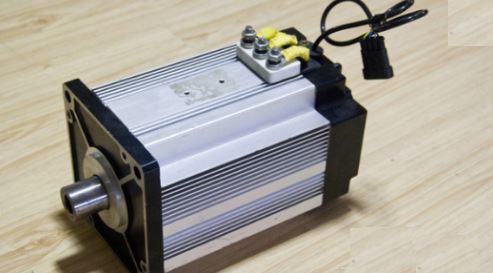
AC motor speed control method
First, the variable pole logarithmic speed control method: change the red coiling mode of the stator winding to change the stator pole number of the cage motor to achieve the speed regulation.
Second, the frequency conversion speed control method: use the frequency converter to change the frequency of the motor stator power supply, thereby changing the speed control method of its synchronous speed.
Third, the cascade speed control method: Cascade speed regulation refers to the adjustable additional potential in the rotor circuit of the wound-type motor to change the slip of the motor to achieve the purpose of speed regulation. Most of the slip power is absorbed by the added additional potential, which is then used to generate additional means to return the absorbed slip power back to the grid or to convert energy for use. According to the slip power absorption and utilization mode, the cascade speed regulation can be divided into the motor cascade speed regulation, the mechanical cascade speed regulation and the thyristor cascade speed regulation mode, and the thyristor cascade speed regulation is often adopted.
Fourth, the winding type motor rotor string resistance speed control method: the line asynchronous motor rotor is inserted into the additional resistor, so that the slip of the motor is increased, and the motor runs at a lower speed. The greater the resistance in series, the lower the speed of the motor. The method is simple in equipment and convenient in control, but the slip power is consumed in the form of heat on the resistor. It has a graded speed regulation and soft mechanical characteristics.
V. Stator voltage regulation method: When changing the stator voltage of the motor, different speeds are obtained. Since the torque of the motor is proportional to the square of the voltage, the maximum torque drops a lot, and the speed adjustment range is small, making the general cage motor difficult to apply. In order to expand the speed regulation range, the voltage regulation speed regulation should use a cage motor with a large rotor resistance value, such as a torque motor for voltage regulation and speed regulation, or a series frequency sensitive resistor on a wound motor.
Sixth, electromagnetic speed control motor speed control method: electromagnetic speed control motor is composed of cage motor, electromagnetic slip clutch and DC excitation power supply. The DC excitation power supply has a small power, usually consisting of a single-phase half-wave or full-wave thyristor rectifier. Changing the conduction angle of the thyristor can change the magnitude of the excitation current.
7. Hydraulic coupler speed control method: The hydraulic coupler is a hydraulic transmission device, generally composed of a pump wheel and a turbine. When the pump wheel rotates under the driving of the prime mover, the liquid in which the liquid is driven is rotated by the blade. When entering the turbine along the outer ring of the pump wheel under the action of centrifugal force, the turbine blades are thrust on the same steering, which drives the production machinery. Speed regulation is achieved by different hydraulic forces (lubricating oil and turbine).
(4) Electromagnetic speed regulation. Only for slip motors. By changing the current of the excitation coil, the mechanism is simple, but the control power is small. It is not suitable for long-term low speed operation.