


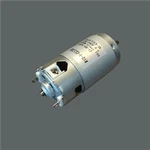


Machine Tools Motor
Classification:Three-phase squirrel cage induction motor
Application:Pumps, Fans, Machinery, food machines. Etc
Notes: The motors can be designed according to customer requirements
1. Product Introduction of the AC motor
Y Series motor is totally enclosed and fan cooling, three-phase squirrel cage induction motor. It is newly designed in conformity with the relevant rules of IEC and EN60034-1 standards.
2. Product Parameter of the AC motor
Type | Power | Current | Speed | Eff | Power Factor | Starting current/Rated current | Starting torque/Rated torque | Max torque/Rated torque | |
Hp | kW | (A) | (r/min) | (%) | (cos¢) | ||||
380V - 50HZ - 2P | |||||||||
Y80M1-2 | 1 | 0.75 | 1.8 | 2800 | 75 | 0.84 | 6.5 | 2.2 | 2.3 |
Y80M2-2 | 1.5 | 1.1 | 2.5 | 2800 | 77 | 0.86 | 7 | 2.2 | 2.3 |
Y90S-2 | 2 | 1.5 | 3.4 | 2800 | 78 | 0.85 | 7 | 2.2 | 2.3 |
Y90L-2 | 3 | 2.2 | 4.8 | 2840 | 80.5 | 0.86 | 7 | 2.2 | 2.3 |
…… | … | … | … | … | … | … | … | … | … |
Please refer to the attachment for more information.
3. Product Feature And Application of the AC motor
Application: Machine tools, transport machinery, agriculture machinery and food machines etc.
Characteristics: high efficiency, high starting torque, low noise, little vibration, reliable operation and easy maintenance
4. Production Details of the AC motor
The motor size and motor material can be designed by request
Custom design: Welcome

5. Product Qualification of the AC motor
Certificate: CCC .ROHS .CE .UL .Etc
According to customer requirement
6.Deliver, Shipping And Serving of the AC motor
In production, we demand not only quantity but also quality.
MOQ: 50pcs.according to unit price and customer request
Sample lead time: 7-15 days
Production lead time: 15-40 days after receipt of approval samples and receipts
7.FAQ
Q: What is your sample policy?
A: We can supply the sample if we have ready parts in stock, but the customers have to pay the sample cost and the courier cost.
Q: Do you test all your goods before delivery?
A: Yes, we have 100% test before delivery.
Q: How do you make our business long-term and good relationship?
A: High quality and best service team.
Q: What kind motors you can provide?
A: We produce all kinds of AC.DC .universal motor, induction, stepper, brushless Etc.
Q:Can we buy your motors from our Chinese agent or Chinese friend?
A:Yes, you can do this. But we must fix all details. Such as the unit price, payment terms, delivery case, and if like this, you need to handle the exporting case.
Q:How many oven motor type and model?
A:We have over 15 oven motor types. all the oven motor models can be changed by different size, performance by your request.
Q: Can you send me some oven motor samples before making mass orders?
A:yes.we can. and we need and also we must make samples before start making mass orders. and also we must make all technical standard for our future mass orders.
Q:When can you finish your oven motor samples?
A: We need around 2 weeks to make the oven motor samples. it also depends on how many samples we need to produce. we usually need customer to pay the samples at the beginning, but the samples cost will be refund in future orders.
Q:Do you also produce other type motors ?
A:Yes,we also produce other type motors. Such as DC motor, Universal motors. gear motors. Induction motors, brushless motors. we can make all kinds of motors.
8.product knowledge.
What are the parameters that affect high speed and high peak current in industrial power tools?
Battery-powered industrial power tools generally operate at low voltages (12-60 V), and brushed DC motors are usually a good economical choice, but brushes are limited by electrical (torque-related current) and mechanical (speed-related) The friction) factor will create wear, so the number of cycles in the service life will be limited, and the service life of the motor will be an issue. Advantages of brushed DC motors: small thermal resistance of coil/case, maximum speed over 100krpm, fully customizable motor, high voltage insulation up to 2500V, high torque.
High-speed stage: First, when the bolt is screwed in or the cutting jaw or the clamping tool approaches the workpiece, there is little resistance, in this stage, the motor runs at a faster free speed, which saves time and increases productivity. High Torque Phase: When the tool performs the more forceful tightening, cutting or clamping phases, the amount of torque becomes critical.
Motors with high peak torque can perform a wider range of heavy duty jobs without overheating, and this cyclically changing speed and torsion must be repeated without interruption in demanding industrial applications. These applications require different speeds, torques and times, require specially designed motors that minimize losses for optimal solutions, devices operate at low voltages and the available power is limited, which is especially true for battery powered devices The essential.
The structure of the DC winding
In a traditional motor (also called inner rotor) structure, the permanent magnets are part of the rotor and there are three stator windings surrounding the rotor, in an outer rotor (or outer rotor) structure, the radial relationship between the coils and the magnets is reversed and the stator coils The center of the motor (the movement) is formed, while the permanent magnets rotate within a suspended rotor that surrounds the movement.
Inner rotor motor construction is more suitable for handheld industrial power tools due to lower inertia, lighter weight and lower losses, and due to longer length, smaller diameter and more ergonomic profile shape, it is easier to integrate into handheld devices, Additionally, lower rotor inertia results in better tightening and clamping control. The coils are wound in slots around the stator, and the magnetic induction in the laminations is high due to the small air gap between the laminations (stator) and the magnets. Therefore, we can use a smaller magnet diameter, the volume of copper is limited by the slot, and it is difficult to wind in the slot, and the coil is installed in the stator slot to reduce the thermal resistance of the coil/stator assembly. When there is no current, the rotor has a preferred magnetic potential in front of the laminations, which can create a toothing or ratcheting torque. One way to reduce the ratcheting torque is to tilt the laminations. Since the coils are inserted into the laminations, a slotted motor very sturdy.
The slotted design (200°C) can withstand higher temperatures than the non-slotted design (150°C), resulting in higher torque. In most cases, however, the limiting factor for a power hand tool is the maximum temperature the tool can reach for extended periods of time (approximately 47°C max), which is a comfortable level for the operator, and in fact, prolonged heat can make holding the tool of operator discomfort, and safety regulations require that the maximum temperature be kept low.
The electrical performance of the motor is determined by the magnetic circuit
The first component (i.e. the magnet) can have a fixed value, but the second component (i.e. the copper winding) can be easily modified, by changing the wire diameter and the number of turns, the torque constant "kt" and resistance "R" can be fine-tuned . High-speed stage: The motor needs to run at high speed with low resistance, ω = (U – R * I ) / ktω (speed, in rad.s-1) U (voltage, in volts) R (resistance, in ohms) I (current in amperes) kt (torque constant in Nm/A), since the torque constant is in the denominator of the calculation, the lower the kt, the higher the rotational speed, which allows more operation in the same time period and increases productivity.
High torque stage: In the second stage, the motor mainly provides peak torque at low speed, according to the laws of physics, torque is the product of torque constant and current: C = kt * IC (torque in Nm) I (current in amperes) kt (torque constant in Nm/A) The higher the kt value, the higher the output torque at a given current. By adjusting the kt value of the motor windings, designers can optimize rotational speed or output torque to find a good balance between torque and rotational speed, thereby reducing overall duty cycle time. There is no unique solution, a compromise kt must be chosen to balance the performance of the motor at different operating stages. Based on simulation and experience, motor design can find optimal solutions during the coil design process. Copper losses and torque, we might consider choosing a lower kt value to increase the speed and compensate the lower kt value with a larger current (I) to achieve a higher output torque, however, a higher current Will increase copper loss, copper loss = R * I^2 The higher the current, the faster the motor and hand tool heat up, thus limiting the maximum torque available, the motor should be designed with as little current as possible to limit heat generation (handheld device temperature affects productivity) and extend battery life.
Iron loss and speed, iron loss affects speed, eddy current loss increases with the square of speed, even rotating under no-load conditions can make the motor heat up, high-speed motors require special precautionary designs to limit eddy current heating.
Hot Tags: machine tools motor, China, manufacturers, suppliers, factory, wholesale, customized, quotation, discount, price, buy, cheap
You Might Also Like


Send Inquiry